

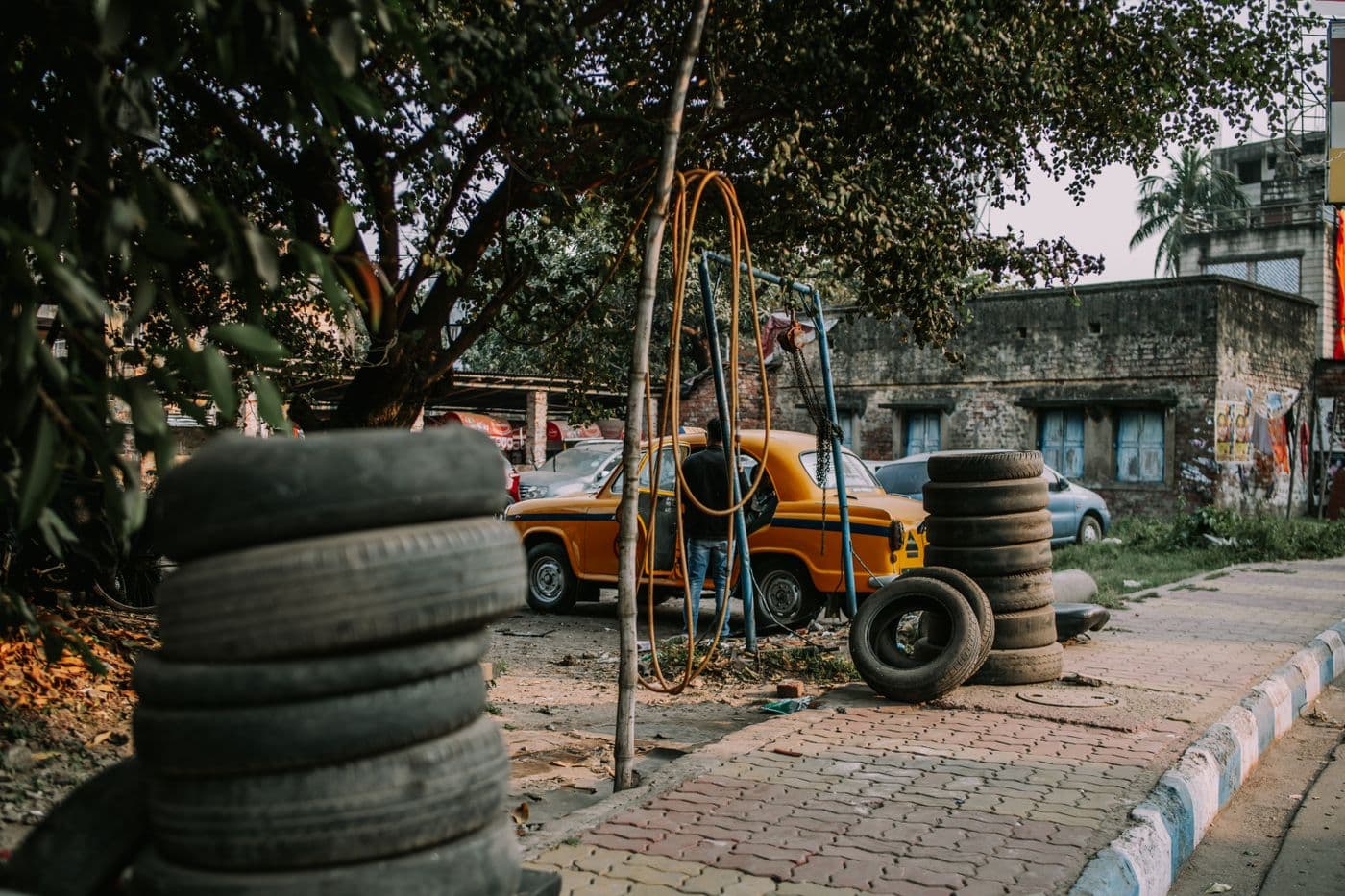
§1What this business is
The shop repairs punctures, patches tubes and applies new rubber to worn or cut spots with an electric vulcaniser, using an air compressor, jacks and tools. It extends tyre life cheaply. The KVIC profile suggests this scheme for young people coming out of ITI.
Capacity: Service income ₹1,25,000 a year at full use (KVIC estimate).
§2Is it right for you?
Who it is for
An ITI pass-out or young person who wants a quick, low-cost roadside business.
Who it is not for
Someone looking for a large, growing business.
Advantages
- Tiny start-up cost (₹1.15 lakh)
- Punctures happen every day — steady walk-in work
- Simple skills that can be learnt quickly
- A roadside spot near a highway or market brings traffic
Drawbacks
- Very small income in the KVIC figures
- Tubeless tyres need different kits and skills
- Long hours, including nights on highways
- Low prices per job
Skills you need
- Puncture repair and vulcanising
- Using compressor and jacks safely
- Tubeless tyre repair
- Handling walk-in customers
Why difficulty 1/5: Very small investment and simple skills; income is modest.
§3Market
Who buys
- Two-wheeler, car and truck drivers
- Tractor and farm-vehicle owners
- Local transport operators
How it sells
- Walk-in customers at a roadside shop
- Calls for on-the-spot repair
- Tie-ups with nearby garages and petrol pumps
Good to know
- The profile says vulcanising extends tyre life at low cost as new tyres get costlier.
§4Raw material & machinery
| Item | Qty | Cost |
|---|---|---|
| Air compressor, electric vulcaniser, jacks and tools | — | ₹50,000 (total) |
| Shed, 250 sq ft | — | ₹50,000 |
From: KVIC Project Profile — Tyre Vulcanizing (PMEGP)
- Repair rubber, patches and rubber solution₹10,000 a year in the profile
§5Licences & registration
- Udyam registration
- Trade licence or vending permission from the local body
- Shop and establishment registration where applicable
§6Schemes & subsidies
- PMEGPCentralActive15–35% subsidy
- MudraCentralActiveLoan up to ₹20 lakh, no collateral
- CM YUVAUPActiveUp to ₹5 lakh, interest-free
PMEGP covers service units; MUDRA Shishu loans (up to ₹50,000) and Kishor loans suit this size; in Uttar Pradesh, CM-YUVA can fund young founders interest-free.
§7Money
How the investment is worked out: KVIC profile total ₹1,15,000: building shed 250 sq ft ₹50,000; equipment ₹50,000 (air compressor, electric vulcaniser, jacks, tools); working capital ₹15,000. Land own.
Working capital: Working capital ₹15,000 (₹15,242 per cycle) for rubber, patches and solution.
Year not printed on the KVIC profile — check current machinery prices.
§8Export potential
A local repair service — not an export business.
§9Risks — where people fail
- Accidents while handling heavy tyres or compressed air
- Tubeless tyres cutting tube repair work
- Competition from nearby shops
- Encroachment action on roadside sites
§1030 / 60 / 90-day plan
A general plan that applies to any business. A plan for this business will be added after research.
- Days 1–30: Visit a working tyre vulcanizing (puncture and tube repair) unit, ask 10 buyers about price and quantity, and get quotations from 3 suppliers.
- Days 31–60: Udyam and the licences you need (Udyam registration, Trade licence or vending permission from the local body), a project report (DPR), and the scheme or loan file.
- Days 61–90: Space and machines, trial production, and first deliveries to 10 customers.
§11Who to connect with
Associations, clusters and training institutes — the directory is being built. Connect
§12Watch
There is no episode on this business yet. Shows are coming soon on the Podcast page.
Want to start Tyre Vulcanizing (Puncture and Tube Repair)?
DPR, loan file or registration — ask us on WhatsApp.
¶Sources
Data review: 6 October 2026. Spotted a mistake? Report it. For information only — not legal or financial advice.