

§1What this business is
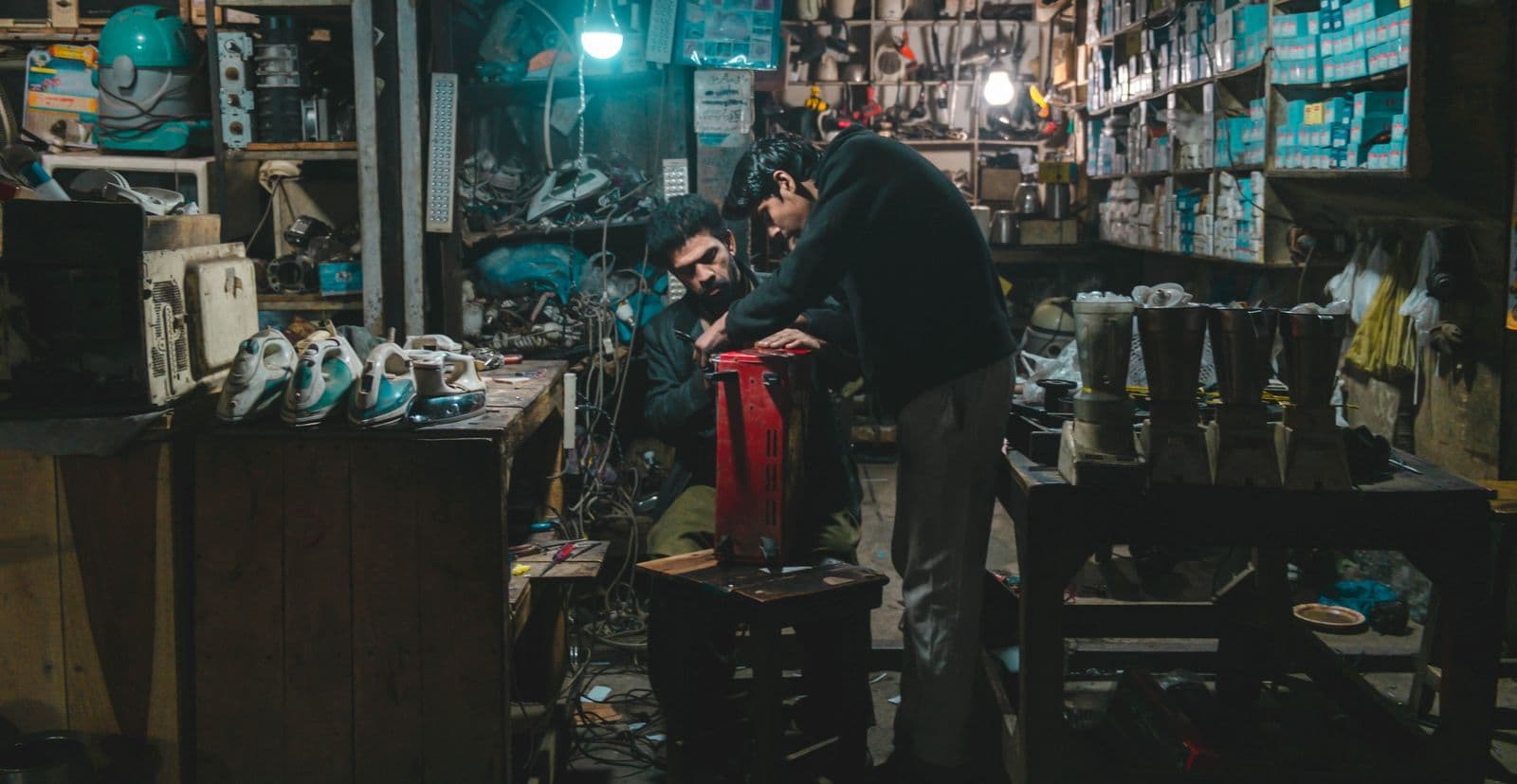
A small workshop-cum-shop that collects used or discarded small appliances from households, scrap dealers and institutions, sorts them into repairable, part-donor and scrap, repairs and safety-tests them, and sells them with a test tag and a 7–30 day warranty. It also repairs customers' own appliances and offers yearly maintenance contracts. Buyers are students, tenants, migrant workers, rural families, hostels, dharamshalas, homestays and small eateries.
Capacity: 300–500 used appliances collected a year; year-2 plan of 1,000 refurbished units at ₹1,200, 1,000 repairs at ₹200, 300 trade-in sales, 400 institutional units and 200 maintenance contracts.
§2Is it right for you?
Who it is for
An ITI electrician or appliance mechanic who is honest about product condition.
Who it is not for
Someone without repair skills or unwilling to give warranties.
Advantages
- Raw stock is cheap — donated or bought at scrap value
- High mark-up on repaired small appliances
- Repair service brings extra walk-ins
- Cuts e-waste in hill towns
Drawbacks
- Buyers distrust second-hand appliances at first
- Spare parts are hard to find in hill towns
- Steady supply of old appliances needs collection drives
- Electrical safety and liability for heating appliances
Skills you need
- Appliance repair and fault finding
- Electrical safety and insulation testing
- Pricing and warranty records
- Community collection drives
Why difficulty 2/5: Low investment, but repair quality and buyer trust must be earned.
§3Market
Who buys
- Students, bachelors and tenants
- Migrant and seasonal workers
- Rural and semi-urban families
- Hostels, dharamshalas, homestays and small eateries
How it sells
- Walk-in shop with demo and price boards
- WhatsApp catalogue and Facebook Marketplace
- Bulk supply to hostels and homestays
- Donation drives with RWAs and schools
Good to know
- The profile estimates year-2 revenue at ₹20–22 lakh.
- Suggested towns: Dehradun, Haldwani, Rudrapur, Almora, Pauri, Srinagar, Haridwar, Rishikesh.
§4Raw material & machinery
| Item | Qty | Cost |
|---|---|---|
| Temperature-controlled soldering kit | — | ₹3,000–5,000 |
| Digital multimeter | — | ₹1,500–2,000 |
| Drill machine | — | ₹4,000–6,000 |
| Insulation tester | — | ₹3,000–4,000 |
| Workbench and rack units | — | ₹10,000–15,000 |
| ESD mat and gloves | — | ₹2,000–3,000 |
| Fire extinguisher | — | ₹3,000–4,000 |
| Storage bins | 20–30 | — |
From: Uttarakhand DUY project profile — Used Electrical Appliance Refurbishment Store in Uttarakhand
- Used appliances300–500 a year, donated, collected or bought at scrap price
- Spare parts: heating coils, cords, plugs, switches, thermostats, fusesbought or salvaged from dead units
- Solder wire and consumablesfor repairs
From: Uttarakhand DUY project profile — Used Electrical Appliance Refurbishment Store in Uttarakhand
§5Licences & registration
- Udyam
- GST (above the turnover threshold)
- Shop and establishment registration / trade licence
- Electrical safety measures: earthing, circuit breakers, fire extinguisher
- E-waste disposal through an authorised recycler
§6Schemes & subsidies
- PMEGPCentralActive15–35% subsidy
- MudraCentralActiveLoan up to ₹20 lakh, no collateral
- CGTMSECentralActiveNo collateral, up to ₹10 crore
The profile names PMEGP credit and DUY subsidy; a MUDRA Kishor loan also fits the ₹5–6 L bank need.
§7Money
How the investment is worked out: Tools and equipment ₹1.20–1.50 L + repair and stock material ₹2.00–2.50 L + shop set-up and furniture ₹1.00–1.20 L + first-year salaries ₹5.40 L + promotion ₹0.50 L = ₹9.00–10.50 L (rented premises). Finance: promoter ₹2–3 L, bank or PMEGP loan ₹5–6 L, DUY subsidy ₹2–3 L.
Year not printed on the profile — check current tool and spare part prices.
§8Export potential
A local repair and resale business; no export.
§9Risks — where people fail
- Electric shock or fire from a poorly repaired unit
- Warranty returns eating into margins
- Irregular supply of used appliances
- Low trust slowing sales
§1030 / 60 / 90-day plan
A general plan that applies to any business. A plan for this business will be added after research.
- Days 1–30: Visit a working used electrical appliance refurbishment store unit, ask 10 buyers about price and quantity, and get quotations from 3 suppliers.
- Days 31–60: Udyam and the licences you need (Udyam, GST (above the turnover threshold)), a project report (DPR), and the scheme or loan file.
- Days 61–90: Space and machines, trial production, and first deliveries to 10 customers.
§11Who to connect with
Associations, clusters and training institutes — the directory is being built. Connect
§12Watch
There is no episode on this business yet. Shows are coming soon on the Podcast page.
Want to start Used Electrical Appliance Refurbishment Store?
DPR, loan file or registration — ask us on WhatsApp.
¶Sources
Data review: 6 October 2026. Spotted a mistake? Report it. For information only — not legal or financial advice.