

§1What this business is
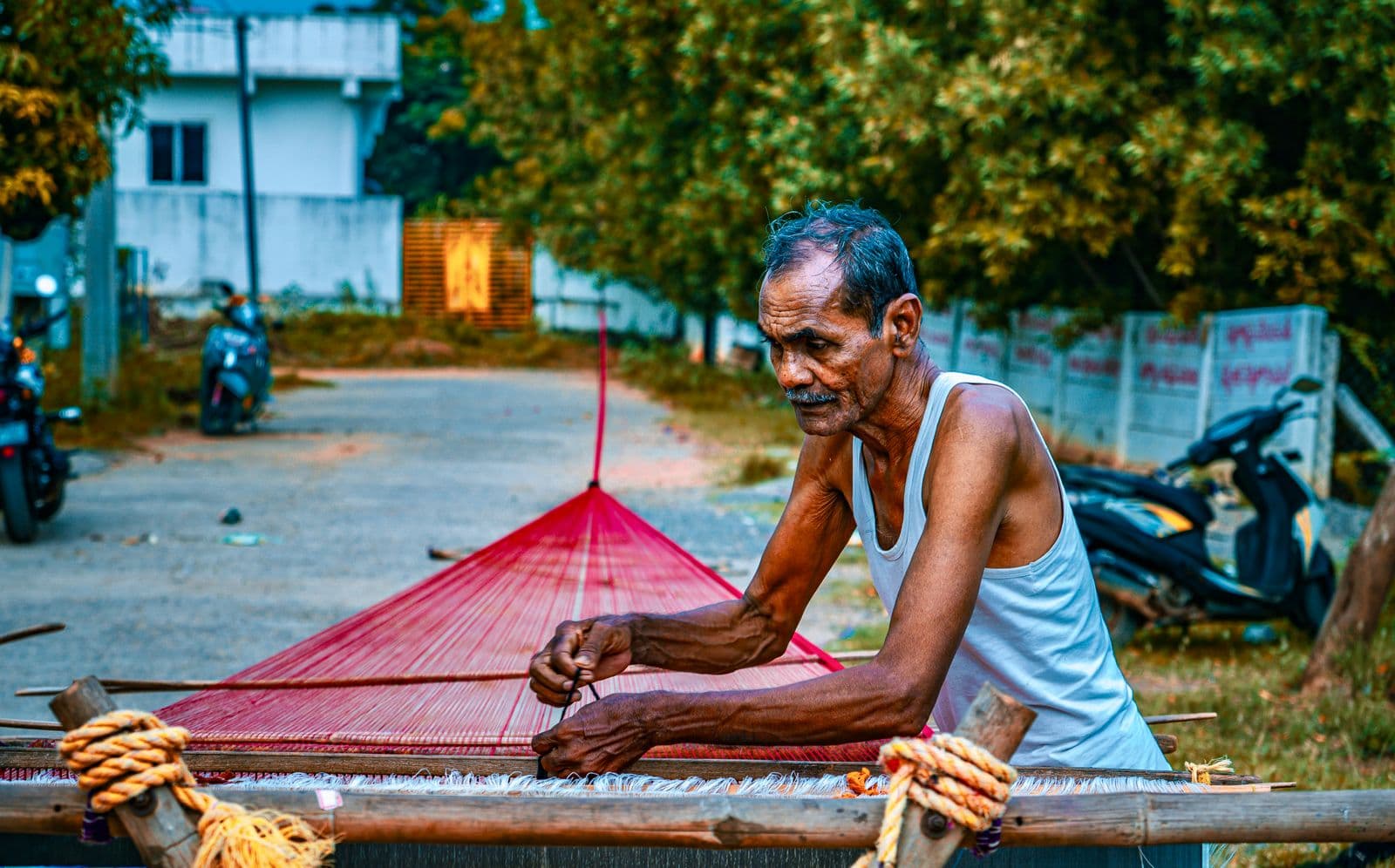
Silk fabric is designed and stretched on wooden frames; karigars wind wire, then stitch zari, silk thread, sequins (salma, sitara, cutdana, moti), glass and wooden beads and ghungroo by hand, and the piece is finished. Zari today usually has a cotton or polyester core wrapped in gold- or silver-coloured metallic yarn. The work goes into Banarasi-style sarees and other garments.
Capacity: 30 embroidered pieces a day on a 10-hour shift; year 1 planned at 55%.
§2Is it right for you?
Who it is for
A karigar or saree trader in an embroidery cluster such as Varanasi, Bareilly or Lucknow.
Who it is not for
Someone without access to skilled karigars or saree buyers.
Advantages
- Almost no machinery — tools cost ₹50,000
- Steady demand for wedding and festive wear
- Gives work to many skilled karigars
Drawbacks
- Thin margin (3.3–6.1%) and high break-even (49%)
- Depends fully on skilled hand labour
- Machine embroidery competes on price
Skills you need
- Zari and bead embroidery
- Design and colour sense
- Managing karigars
Why difficulty 2/5: Low investment; success rests on karigars and design.
§3Market
Who buys
- Saree and garment makers
- Boutiques and bridal-wear shops
- Wholesale traders in big cities
How it sells
- Job work for saree houses
- Wholesale textile markets
- Online marketplaces
Good to know
- The report says zari sarees are supplied to all major cities of the country.
§4Raw material & machinery
| Item | Qty | Cost |
|---|---|---|
| Wooden frames (adda) | 1 set | ₹40,000 |
| Needles | 1 set | ₹10,000 |
From: PMEGP sample project report — Zari Silk Embroidery (prepared by Udyami/Samadhan)
- Silk thread in different colours and silk fabricbase material
- Sequins: salma, sitara, cutdana, motiembellishment
- Glass beads, wooden beads and ghungrooembellishment
- Dabka, kasab and kora (zari wires)metallic work
- Mustard oil and cotton thread for tari; woollen, cotton or chenille for banaconsumables
From: PMEGP sample project report — Zari Silk Embroidery (prepared by Udyami/Samadhan)
Suppliers in Building Business Bazaar
Bagodara Embroidery And Applique Cluster · Ahmedabad →Banjara Embroidery Cluster · Nizamabad →Bassantrai Badge And Embroidery Producer Company Limited · Godda →Chickan Embroidery And Stitching · Hardoi →Chikan Embroidery And Zari Cluster · Lucknow →Chikankari Embroidery & Stitching Cluster · Lucknow →Chikankari Embroidery & Stitching Cluster · Unnao →Dhemaji Traditional Embroidery Cluster · Dhemaji →Embroidered Fashion Clothing And Accessories Cluster · Katni →Embroidery & Kantha Stitching · South 24 Paraganas →Embroidery & Stitching Cluster Gujarat · Surendranagar →Embroidery & Stitching Cluster Maharashtra · Chandrapur →
In our raw material database
Viscose filament yarn (VFY) →Raw silk — mulberry →Zari and metallic yarn →
§5Licences & registration
- Udyam registration
- GST registration
- Artisan identity card (Pehchan) from the Development Commissioner (Handicrafts) — useful for craft schemes and fairs
- Trade licence from the local body
§6Schemes & subsidies
- PMEGPCentralActive15–35% subsidy
- MudraCentralActiveLoan up to ₹20 lakh, no collateral
- CGTMSECentralActiveNo collateral, up to ₹10 crore
- Stand-Up IndiaCentralClosed₹10 lakh – ₹1 crore loan
PMEGP fits (₹10.85 L); MUDRA covers the full cost; CGTMSE for a loan without collateral; Stand-Up India for SC/ST and women founders.
§7Money
How the investment is worked out: Civil work ₹5.00 L + furniture & fixtures ₹1.50 L + working capital ₹4.35 L = ₹10.85 L. Tools (wooden frames ₹40,000, needles ₹10,000) are listed separately at ₹50,000.
Working capital: Working capital ₹4.35 L, of which bank finance ₹3.92 L; 10 days of stock, 10 days' credit to buyers, 7 days from suppliers.
Year not printed on the report — check current machinery prices.
§8Export potential
Confirm the HS code in the DGFT ITC(HS) lookup before you export
Export council / board: EPCH (Export Promotion Council for Handicrafts)
- Confirm the 8-digit ITC(HS) line with DGFT or your customs broker before shipping.
- You need an Import Export Code (IEC) from DGFT before the first shipment.
§9Risks — where people fail
- Seasonal demand around weddings and festivals
- Zari and silk price rises
- Delayed payment from saree traders
§1030 / 60 / 90-day plan
A general plan that applies to any business. A plan for this business will be added after research.
- Days 1–30: Visit a working zari and silk embroidery unit, ask 10 buyers about price and quantity, and get quotations from 3 suppliers.
- Days 31–60: Udyam and the licences you need (Udyam registration, GST registration), a project report (DPR), and the scheme or loan file.
- Days 61–90: Space and machines, trial production, and first deliveries to 10 customers.
§11Who to connect with
Associations, clusters and training institutes — the directory is being built. Connect
§12Watch
There is no episode on this business yet. Shows are coming soon on the Podcast page.
Want to start Zari and Silk Embroidery?
DPR, loan file or registration — ask us on WhatsApp.
¶Sources
Data review: 6 October 2026. Spotted a mistake? Report it. For information only — not legal or financial advice.