

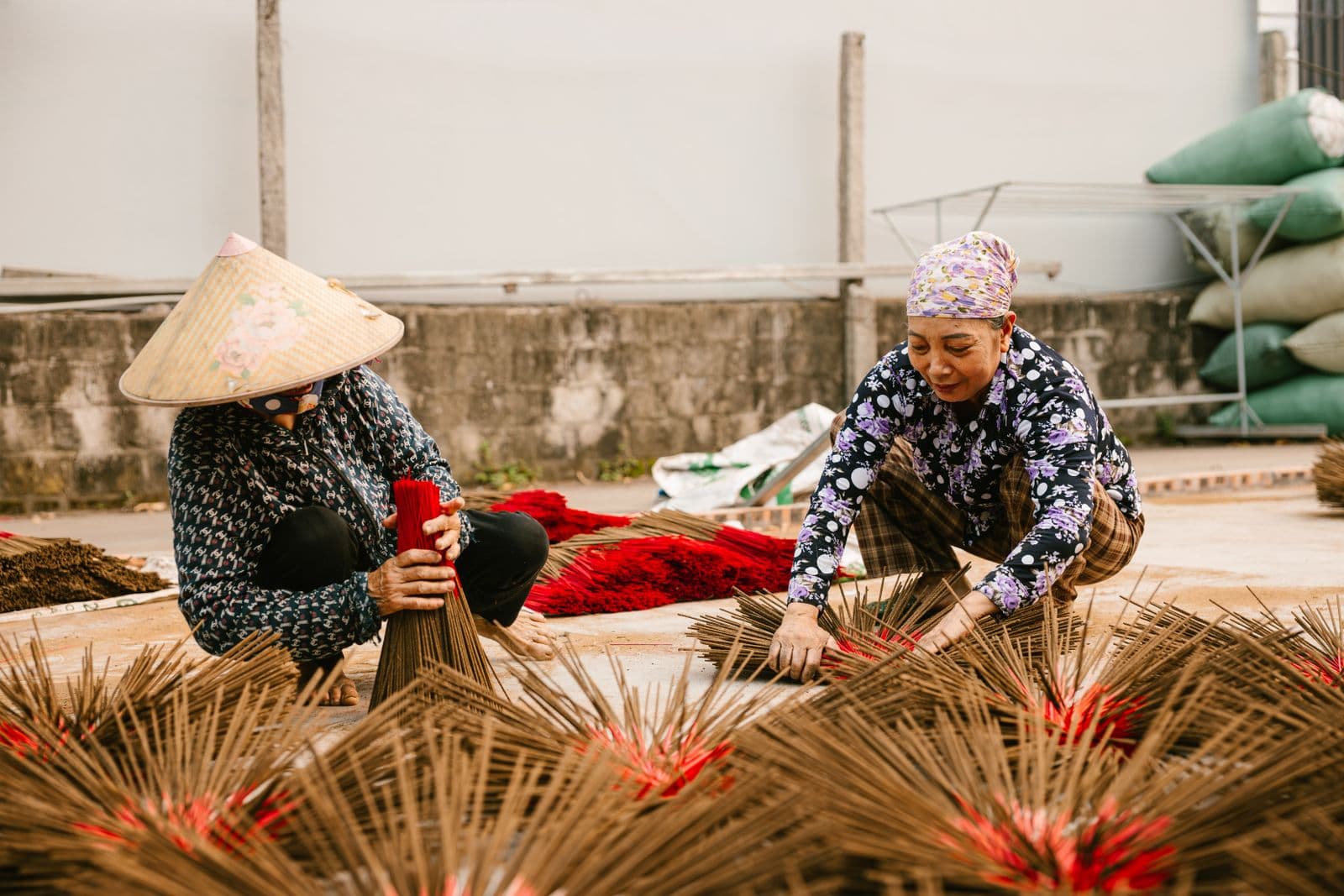
§1What this business is
Bamboo poles are cleaned, cross-cut into cylinders, split into slats, made into slivers of even thickness, turned into round sticks, polished, cut to length, dried, graded and packed in 1 kg bundles. Agarbatti makers buy the sticks; much of their need is now met by imports from China and Vietnam, says the report.
Capacity: 300 kg of sticks a day, 90,000 kg a year; the plan runs at 60% in year 1 and 80% in year 5. The text notes work may run only 9 months a year because of the rains.
§2Is it right for you?
Who it is for
Someone near bamboo forests or plantations with links to agarbatti makers.
Who it is not for
Someone without a steady bamboo supply or buyers lined up.
Advantages
- Agarbatti makers need a steady supply of sticks; India's agarbatti market is about ₹6,000 crore, says the report
- Machine-made round sticks can replace imported sticks
- Local workers already know manual stick making
- Waste (about 40%) can fuel the dryer or go to charcoal units
Drawbacks
- High break-even (51%)
- Strong competition from China and Vietnam
- Bamboo flowering can cause raw material shortages
- Traders control much of the trade, so the stick maker's bargaining power is low
Skills you need
- Running sliver, round-stick and polishing machines
- Grading sticks to size
- Bamboo sourcing from collectors and growers
- Selling to agarbatti units
Why difficulty 3/5: Machines are simple; the high break-even, import competition and seasonal supply make it tough.
§3Market
Who buys
- Agarbatti (incense stick) makers, from cottage units to FMCG companies
How it sells
- Direct supply in 1 kg bundles
- E-commerce and logistics tie-ups, trade fairs (report strategy)
Good to know
- The report says India accounts for over 70% of world incense-stick consumption and the Indian agarbatti market is about ₹6,000 crore, of which ₹2,000 crore is organised.
- It says about 70% of the industry's bamboo stick needs are met by imports from China and Vietnam after import duty fell from 30% to 10%.
- India exported agarbattis worth USD 498.02 million between FY2012 and FY2016, says the report.
§4Raw material & machinery
| Item | Qty | Cost |
|---|---|---|
| Bamboo cross-cutting machine | — | — |
| Bamboo manual splitter machine | — | — |
| Heavy-duty sliver making machine | — | — |
| Round stick machine | — | — |
| Stick polishing machine | — | — |
| Stick sizing machine | — | — |
| Dryer (or open-air drying) | — | — |
| Total plant and machinery (the report says machines are imported from China or Vietnam; item prices not printed) | — | ₹11.04 lakh |
From: PMEGP sample project report — Bamboo Sticks Production Unit (prepared by Udyami/Samadhan)
- Bamboo poles (about 6 kg each)30,000 poles a year (2,500 a month), ₹100 a pole — ₹30.00 lakh a year at full capacity
- Common speciesMuli (Melocanna baccifera), Bari, Mritinga, Barak and Rupai bamboo
From: PMEGP sample project report — Bamboo Sticks Production Unit (prepared by Udyami/Samadhan)
Suppliers in Building Business Bazaar
Metro Agarbatti · Hyderabad →Star Educational supply co · Hyderabad →
In our raw material database
§5Licences & registration
- Udyam registration
- GST registration
- Forest transit permit for bamboo where the state requires it
- Trade licence from the local body
§6Schemes & subsidies
- PMEGPCentralActive15–35% subsidy
- MudraCentralActiveLoan up to ₹20 lakh, no collateral
- CGTMSECentralActiveNo collateral, up to ₹10 crore
PMEGP (the report was prepared for it), MUDRA up to ₹20 L and CGTMSE for a collateral-free loan. The report also mentions support under the National Bamboo Mission.
§7Money
How the investment is worked out: Plant and machinery ₹11.04 L + furniture ₹1.18 L + working capital ₹5.55 L = ₹17.77 L; land and 2,000 sq ft shed own or rented.
Working capital: Working capital ₹5.55 L in the project cost (bank working capital ₹5.00 L): 20 days of poles and 10 days of finished sticks.
Year not printed on the report — check current machinery and raw-material prices.
§8Export potential
The project report prints no HS code; look up the 8-digit ITC(HS) line on the DGFT website or with a customs broker before exporting.
§9Risks — where people fail
- Import competition and policy changes
- Raw material shortage after bamboo flowering
- Low capacity use in the rainy season
- Machine wear and breakdowns
§1030 / 60 / 90-day plan
A general plan that applies to any business. A plan for this business will be added after research.
- Days 1–30: Visit a working bamboo sticks for agarbatti unit, ask 10 buyers about price and quantity, and get quotations from 3 suppliers.
- Days 31–60: Udyam and the licences you need (Udyam registration, GST registration), a project report (DPR), and the scheme or loan file.
- Days 61–90: Space and machines, trial production, and first deliveries to 10 customers.
§11Who to connect with
Associations, clusters and training institutes — the directory is being built. Connect
§12Watch
There is no episode on this business yet. Shows are coming soon on the Podcast page.
Want to start Bamboo Sticks for Agarbatti?
DPR, loan file or registration — ask us on WhatsApp.
¶Sources
Data review: 6 October 2026. Spotted a mistake? Report it. For information only — not legal or financial advice.