

§1What this business is
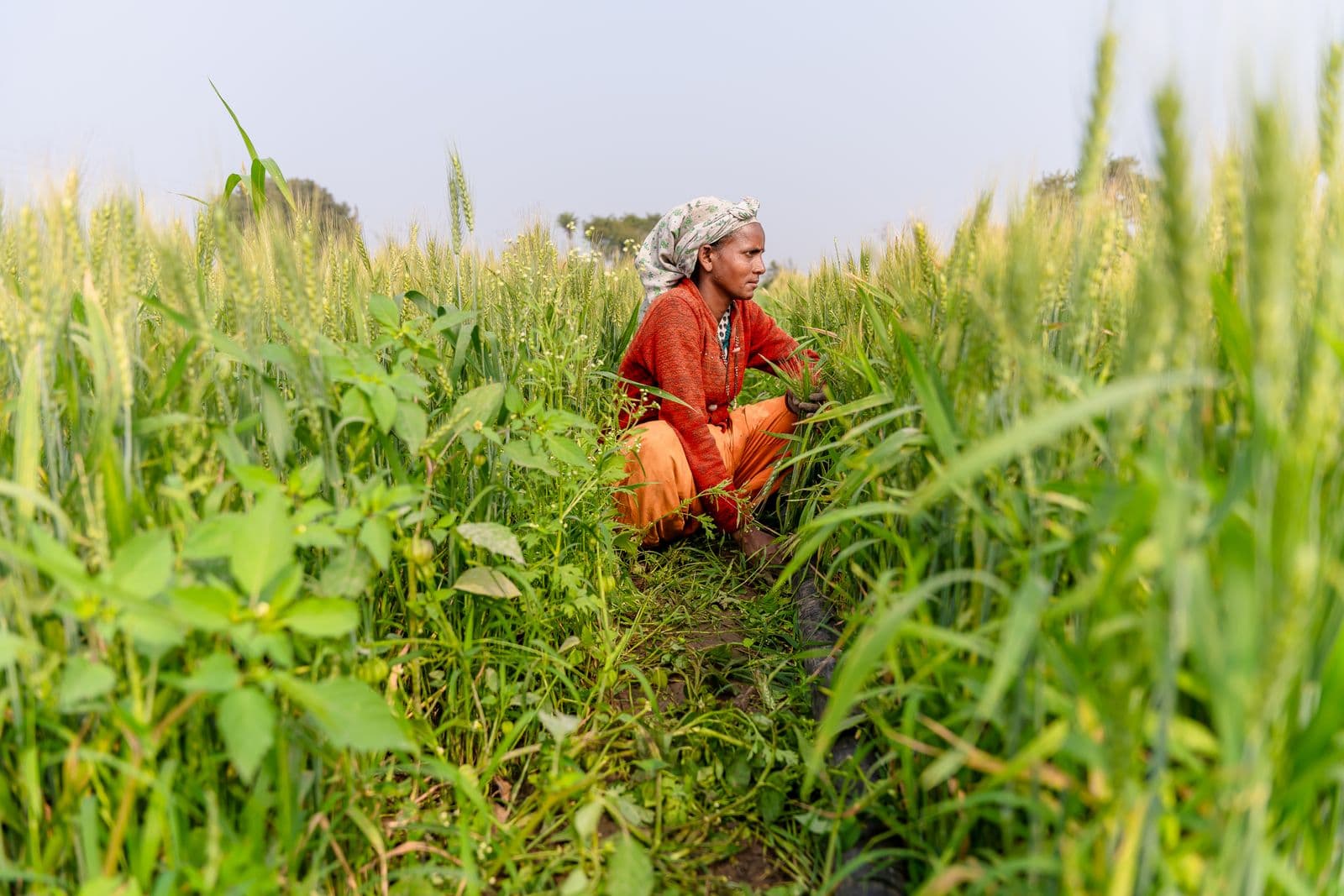
In India celery is grown mainly for seed, not for the leaf stalk. The seed is a spice and holds 2-3% essential oil used to flavour tinned food, sauces and tomato juice and in perfumery and medicines. It is a rabi crop of Punjab, Haryana and western Uttar Pradesh, on silt loam to loamy soil that does not waterlog. Seed is sown in nursery beds between 15 September and 15 October, 60-day-old seedlings are transplanted in early December, and the crop stands 120-140 days. Plants are cut in late March or early April when 80% of the umbels turn light brown, then dried, threshed, winnowed and sieved.
Capacity: 1 acre, giving 5 quintals of dry seed a year in the model. The report puts field yield at 10-13 quintals a hectare.
§2Is it right for you?
Who it is for
A farmer in Punjab, Haryana or western Uttar Pradesh who already has a tube-well and a link to seed-spice traders.
Who it is not for
Clay or waterlogged land, or a new grower who would have to build the whole irrigation set-up for this crop alone.
Advantages
- A crop of one winter season — the field is free for a kharif crop
- Pests and diseases cause little damage
- Seed stores 1-3 years without much loss of oil
- Indian celery seed leads the world market
Drawbacks
- Weakest returns among these NHB models — IRR of 12.04%
- Home demand is small; about two-thirds of the crop is exported
- A few exporters control the trade and prices swing
- Late transplanting cuts the yield sharply
Skills you need
- Raising a nursery and transplanting on time
- Irrigating fortnightly, then weekly near seed maturity
- Cutting in the early morning to avoid seed shedding
- Drying, threshing and cleaning seed without losing oil
Why difficulty 2/5: Simple field crop with few pests; the hard part is the thin margin and a narrow export market.
§3Market
Who buys
- Seed-spice traders and exporters
- Units that distil celery seed oil
- Food processors who flavour sauces, tinned food and pickles
How it sells
- Cleaned, sieved and dried seed sold to traders
- Seed crushed and steam-distilled for 10-12 hours where oil is made
Good to know
- About 5,000 ha is under the crop in Punjab, Haryana and western Uttar Pradesh; about 90% of the produce comes from Punjab.
- The report quotes seed oil at ₹1,500-1,600 a kg and says the few exporters are based in Amritsar.
§4Raw material & machinery
| Item | Qty | Cost |
|---|---|---|
| Tube-well with submersible pump | 1 | ₹30,000 |
| Pump and electrical installation | — | ₹25,000 |
| Farm equipment | — | ₹5,000 |
| Pump house (100 sq ft at ₹100 a sq ft) | 1 | ₹10,000 |
| Labour shed (100 sq ft at ₹50 a sq ft) | 1 | ₹5,000 |
| Barbed-wire fencing and gates (846 running ft at ₹35) | — | ₹29,600 |
From: National Horticulture Board model bankable project — Celery (2005)
- Celery seedlings₹1,000 an acre; nursery beds of 8 m × 1.25 m are sown at 50 g of seed a bed
- Farmyard manure, fertilisers and chemicalsinput cost ₹5,000 at planting; 20 to 30 tonnes of farmyard manure a hectare at land preparation
From: National Horticulture Board model bankable project — Celery (2005)
§5Licences & registration
- No licence is needed to grow the crop on your own farm land
- Land ownership or lease papers for the bank loan and subsidy file
- FSSAI registration if you sell packed seed as a spice under your own name
- Spices Board registration if you export seed or seed oil
Start it in your state
Pick your state: today’s cost, central + state subsidy, raw material, land and help, on one page.
§6Schemes & subsidies
The model funds the project as farmer's share ₹62,510, capital subsidy ₹25,000 and term loan ₹37,500. Under NHB's current rules, open-field horticulture gets a 35% back-ended subsidy (45% in North-East, Himalayan and scheduled areas) only on projects above 2 hectares that carry a bank term loan, and land cost is not counted. A one-acre plot qualifies only as part of a larger project.
§7Money
How the investment is worked out: One-acre model: land levelling ₹4,000 + fencing ₹29,600 + pump house ₹10,000 + labour shed ₹5,000 + tube-well with submersible pump ₹30,000 + pump and electrical installation ₹25,000 + farm equipment ₹5,000 + cultivation ₹16,500 (seedlings ₹1,000, inputs ₹5,000, power ₹2,000, land preparation ₹4,000, harvesting, threshing and drying ₹3,500, other farm work ₹1,000) = ₹1,25,100. Land cost is not included. No distillation unit is costed.
Working capital: Recurring cost is ₹18,600 in year 1, ₹13,900 in year 2 and ₹17,400 in year 3.
Prices from 2005 — planting material, labour and input costs are much higher now. The model counts labour at only ₹70 a day.
§8Export potential
Confirm the HS code in the DGFT ITC(HS) lookup before you export
Export council / board: Spices Board
- India exported 5,250 tonnes of celery seed worth ₹1,701 lakh in 2000-01 (Spices Board figures quoted in the report).
- The seed goes mainly to American and European markets; about two-thirds of the crop is exported.
§9Risks — where people fail
- A week-long cold spell in mid-season causing bolting and low seed yield
- Seed shedding if the harvest is late
- Oil loss from too long in the sun while drying
- Price falls when exporters hold large stocks
§1030 / 60 / 90-day plan
A general plan that applies to any business. A plan for this business will be added after research.
- Days 1–30: Visit a working celery cultivation (seed crop) unit, ask 10 buyers about price and quantity, and get quotations from 3 suppliers.
- Days 31–60: Udyam and the licences you need (No licence is needed to grow the crop on your own farm land, Land ownership or lease papers for the bank loan and subsidy file), a project report (DPR), and the scheme or loan file.
- Days 61–90: Space and machines, trial production, and first deliveries to 10 customers.
§11Who to connect with
§12Watch
There is no episode on this business yet. Shows are coming soon on the Podcast page.
Want to start Celery Cultivation (Seed Crop)?
DPR, loan file or registration — ask us on WhatsApp.
¶Sources
Data review: 6 October 2026. Spotted a mistake? Report it. For information only — not legal or financial advice.