

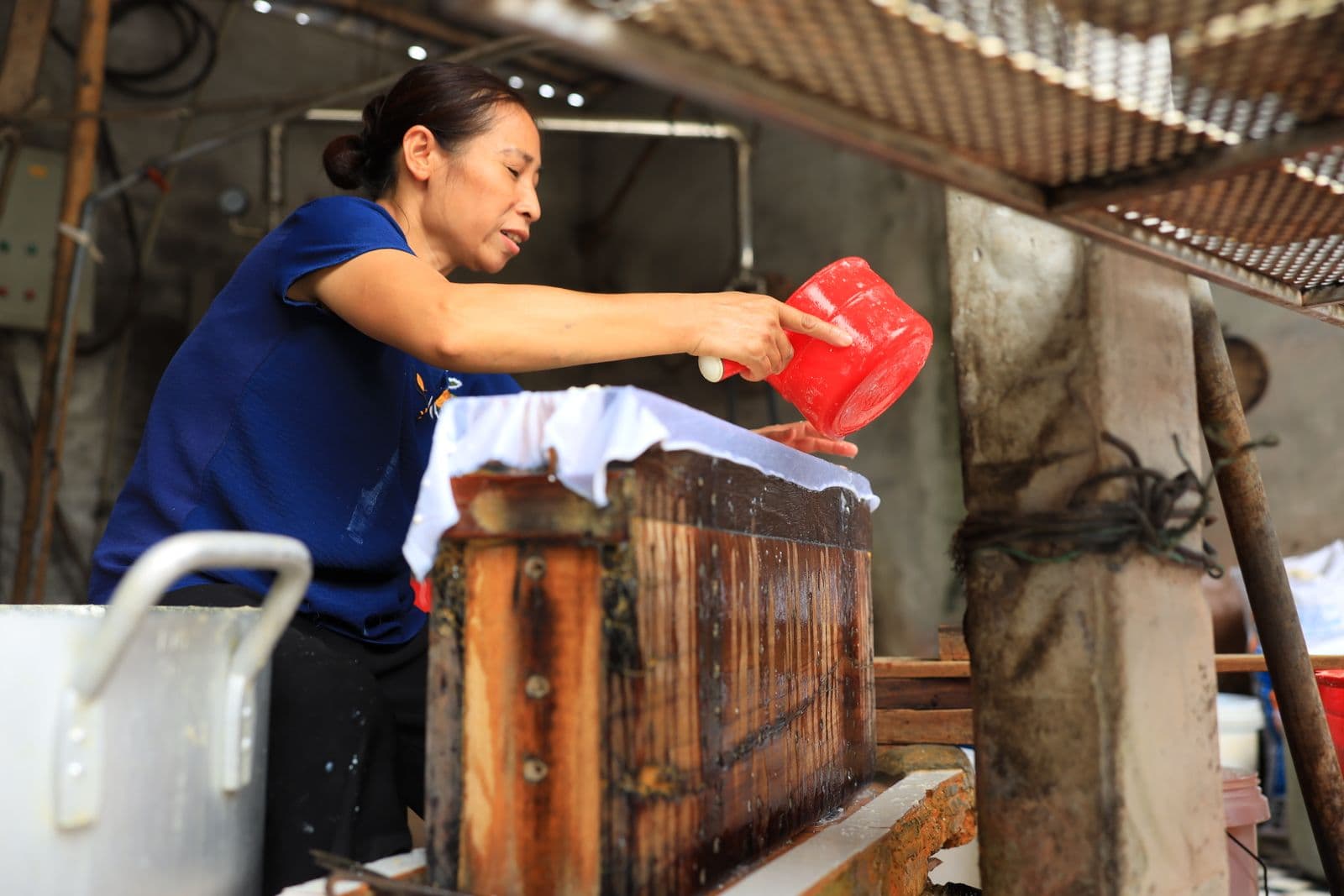
§1What this business is
Waste paper or cotton rags are chopped, beaten into pulp, lifted into sheets in vats, pressed in a hydraulic press, dried and calendered, then cut to size. The sheets go into envelopes, files, visiting cards, gift wraps and carry bags. Buyers are stationery and gift makers, exporters and khadi outlets.
Capacity: 45 reams (100 sheets each) a day in the smaller report; 0.08 tonne a day, 24 tonnes a year, in the waste-rag report.
§2Is it right for you?
Who it is for
Someone who can design and sell paper products — stationery, gift packs, bags — not just sheets.
Who it is not for
Someone in a water-scarce place or without a market for eco products.
Advantages
- Raw material is waste paper or cotton rags — cheap and plentiful
- Eco-friendly product with export demand
- Unskilled local workers, including women, can be trained
- KVIC has long backed this craft
Drawbacks
- Needs a lot of water and space for drying
- Slow output compared with mill paper
- Selling needs design-led products, not plain sheets
- Effluent from pulping must be handled
Skills you need
- Pulping and sheet forming
- Colour and texture control
- Product design (stationery, bags)
- Export and gift-trade selling
Why difficulty 2/5: Simple process; the work is in water handling and selling finished products.
§3Market
Who buys
- Stationery, file and envelope makers
- Gift-wrap and paper-bag makers
- Exporters of handmade paper products
- Khadi and craft outlets
How it sells
- Supply to converters and exporters
- Khadi Bhandars and craft fairs
- Own branded products online
Good to know
- The waste-rag report sells paper at ₹3,00,000 a tonne.
- The smaller report notes strong export demand from the USA, Germany, Europe and Australia.
§4Raw material & machinery
| Item | Qty | Cost |
|---|---|---|
| Paper shredder | 1 | ₹20,000 |
| Paper pulper | 1 | ₹70,000 |
| De-inking machine | 1 | ₹2,50,000 |
| Paper vat | 1 | ₹60,000 |
| Hydraulic press | 1 | ₹1,50,000 |
| Calendering machine | 1 | ₹2,00,000 |
| Paper cutting machine | 1 | ₹1,50,000 |
| Rag chopper | 1 | ₹70,000 |
| Hollander beater | 1 | ₹2,85,000 |
| Auto vat | 4 | ₹1,60,000 (₹40,000 each) |
| Hydraulic press | 1 | ₹2,75,000 |
| Calendering machine | 1 | ₹4,25,000 |
| Cutting machine | 1 | ₹3,50,000 |
| Weighing balance | 1 | ₹10,000 |
From: PMEGP sample project report — Handmade Paper (prepared by Udyami/Samadhan) · PMEGP sample project report — Handmade Paper from Waste (prepared by Udyami/Samadhan)
- Waste papermain raw material in the ₹14.67 L report, with water, CMC powder, colour and chemicals
- Cotton hosiery rags and cotton jeans waste30 tonnes a year for 24 tonnes of paper, at ₹80,000 a tonne (₹25 L report)
- Adhesives and colour₹2.40 L a year at full capacity (₹25 L report)
From: PMEGP sample project report — Handmade Paper (prepared by Udyami/Samadhan) · PMEGP sample project report — Handmade Paper from Waste (prepared by Udyami/Samadhan)
In our raw material database
§5Licences & registration
- Udyam
- GST
- State pollution board consent (wastewater from pulping)
- IEC for export
§6Schemes & subsidies
- PMEGPCentralActive15–35% subsidy
- MudraCentralActiveLoan up to ₹20 lakh, no collateral
- CGTMSECentralActiveNo collateral, up to ₹10 crore
- Stand-Up IndiaCentralClosed₹10 lakh – ₹1 crore loan
₹14.67–25 L projects fit PMEGP (the ₹25 L report lists KVIC margin money) and CGTMSE; the smaller one fits MUDRA (up to ₹20 L); Stand-Up India for SC/ST or women founders.
§7Money
How the investment is worked out: Handmade Paper report ₹14.67 L: plant & machinery ₹9.00 L, furniture ₹0.30 L, working capital ₹5.37 L (premises own/rented). Handmade Paper from Waste report ₹25.00 L: building & civil work (4,000 sq ft) ₹2.00 L, plant & machinery ₹15.75 L, furniture ₹0.25 L, pre-operative ₹0.40 L, working capital ₹6.61 L.
Working capital: ₹5.37 L and ₹6.61 L — 15 to 30 days of raw material and finished paper.
Year not printed on the report — check current machinery prices.
§8Export potential
Confirm the HS code in the DGFT ITC(HS) lookup before you export
Export council / board: CAPEXIL / EPCH (for paper craft products)
- Check the exact 8-digit code and the right export council in the DGFT ITC-HS list before shipping.
§9Risks — where people fail
- Water and effluent problems
- Weak demand for plain sheets
- Monsoon slowing drying
- Dependence on a few export buyers
§1030 / 60 / 90-day plan
A general plan that applies to any business. A plan for this business will be added after research.
- Days 1–30: Visit a working handmade paper unit unit, ask 10 buyers about price and quantity, and get quotations from 3 suppliers.
- Days 31–60: Udyam and the licences you need (Udyam, GST), a project report (DPR), and the scheme or loan file.
- Days 61–90: Space and machines, trial production, and first deliveries to 10 customers.
§11Who to connect with
Associations, clusters and training institutes — the directory is being built. Connect
§12Watch
There is no episode on this business yet. Shows are coming soon on the Podcast page.
Want to start Handmade Paper Unit?
DPR, loan file or registration — ask us on WhatsApp.
¶Sources
- PMEGP sample project report — Handmade Paper (prepared by Udyami/Samadhan)
- PMEGP sample project report — Handmade Paper from Waste (prepared by Udyami/Samadhan)
Data review: 6 October 2026. Spotted a mistake? Report it. For information only — not legal or financial advice.