

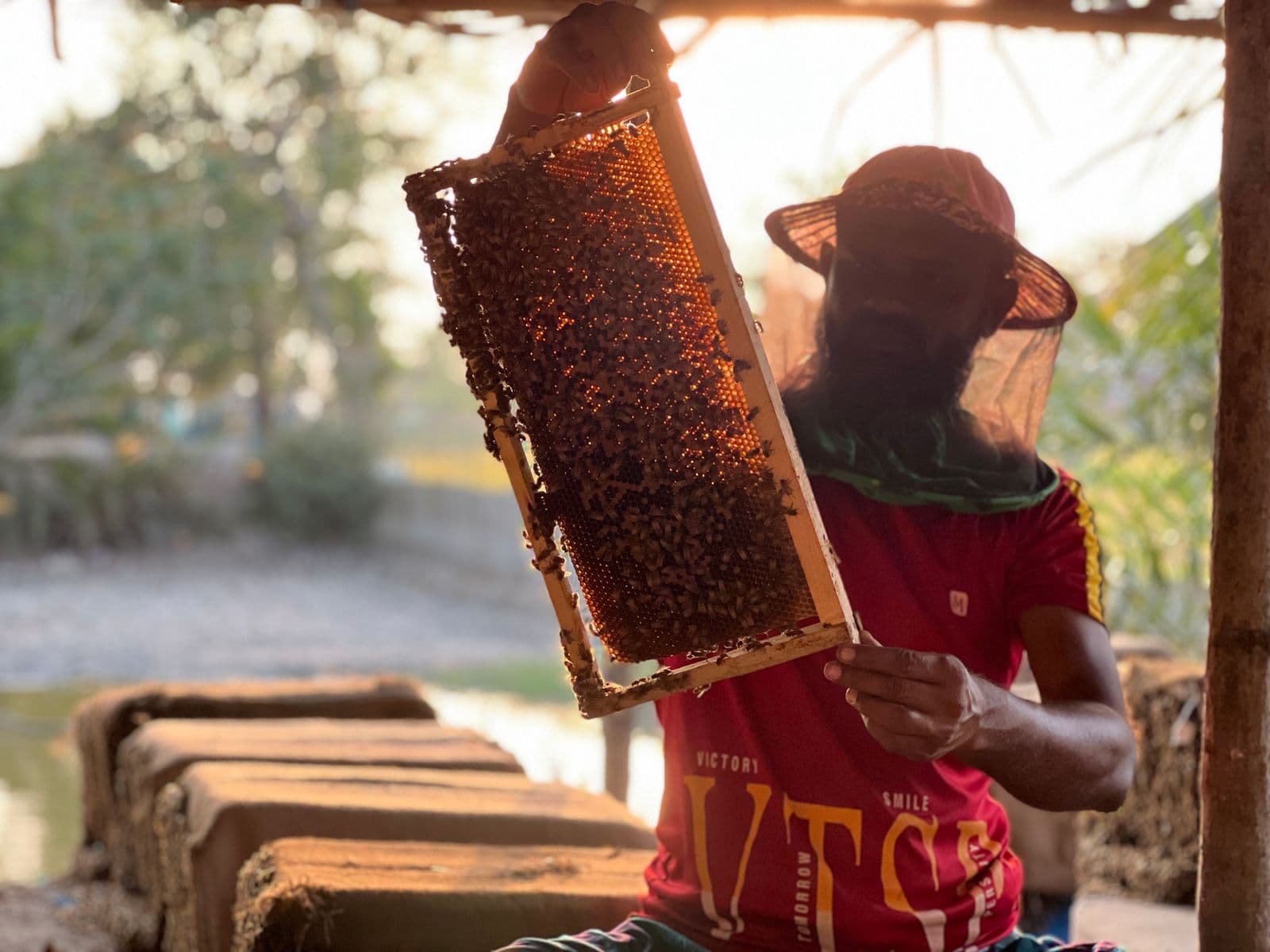
§1What this business is
Mango, papaya, pineapple and guava are washed, boiled, peeled and pulped; the pulp is boiled with sugar, citric acid and pectin, a preservative is added, and honey is mixed in once it cools to about 65 °C. The jam is filled hot into 500 ml wide-mouth glass bottles and sealed. KVIC promotes it to raise honey sales for beekeepers.
Capacity: Production valued at ₹10.29 L a year at cost (quantity not printed).
§2Is it right for you?
Who it is for
A beekeeper family, SHG or small food maker wanting a value-added honey product.
Who it is not for
Someone expecting large volumes without a sales network.
Advantages
- Very small investment (₹3.15 L)
- Honey jam stands out from ordinary jam
- Uses seasonal fruit and local honey
- Simple kitchen-scale process
Drawbacks
- Glass bottles are costly and breakable
- Fruit is seasonal; pulp must be stored
- Big jam brands own the shelf
- The profile's machinery list is wrong, so you must price equipment yourself
Skills you need
- Fruit processing and jam setting
- Food hygiene and FSSAI rules
- Bottling and sealing
- Local and online selling
Why difficulty 1/5: Tiny investment and a simple home-scale process.
§3Market
Who buys
- Households through shops and fairs
- Bakeries and hotels
- Khadi and organic stores
How it sells
- Khadi Bhandars and exhibitions
- Local shops
- Online sale
Good to know
- The profile says honey-based value-added foods raise beekeepers' income and rural jobs.
- Sales at full capacity are ₹17.50 L a year in the profile.
§4Raw material & machinery
| Item | Qty | Cost |
|---|---|---|
| Equipment (total; the itemised list in the profile belongs to a leather unit and is not usable) | — | ₹1,50,000 |
From: KVIC Project Profile — Honey Jam Manufacturing (PMEGP)
- Fruits: mango, papaya, pineapple, guavapulped after washing and boiling
- Honey, sugar, citric acid, pectinjam ingredients
- Potassium metabisulphitepreservative
- All raw material together₹5.94 L a year in the profile
- 500 ml wide-mouth glass bottles with lug caps; packingpacking material ₹10,000 a year
From: KVIC Project Profile — Honey Jam Manufacturing (PMEGP)
In our raw material database
§5Licences & registration
- FSSAI registration or licence
- Udyam
- GST if turnover crosses the limit
- Legal Metrology packaged commodity registration
§6Schemes & subsidies
- PMFMECentralUnclear35% subsidy, up to ₹10 lakh
- PMEGPCentralActive15–35% subsidy
- MudraCentralActiveLoan up to ₹20 lakh, no collateral
- CM YUVAUPActiveUp to ₹5 lakh, interest-free
Food processing: PMFME fits; ₹3.15 L also fits PMEGP, MUDRA Shishu/Kishor and CM-YUVA in UP.
§7Money
How the investment is worked out: KVIC profile total ₹3.15 L: equipment ₹1.50 L, working capital ₹1.65 L. Land own, shed rented. Note: the equipment list printed in this profile is copied from a leather unit, so only the ₹1.50 L total is usable.
Working capital: Working capital ₹1.65 L; raw material ₹5.94 L a year.
Year not printed on the KVIC profile — check current machinery prices.
§8Export potential
The report covers the home market only; it does not discuss export.
§9Risks — where people fail
- Spoilage from poor sealing
- Fruit and honey price swings
- Breakage in transport
- Slow sales against brands
§1030 / 60 / 90-day plan
A general plan that applies to any business. A plan for this business will be added after research.
- Days 1–30: Visit a working honey jam manufacturing unit, ask 10 buyers about price and quantity, and get quotations from 3 suppliers.
- Days 31–60: Udyam and the licences you need (FSSAI registration or licence, Udyam), a project report (DPR), and the scheme or loan file.
- Days 61–90: Space and machines, trial production, and first deliveries to 10 customers.
§11Who to connect with
Associations, clusters and training institutes — the directory is being built. Connect
§12Watch
There is no episode on this business yet. Shows are coming soon on the Podcast page.
Want to start Honey Jam Manufacturing?
DPR, loan file or registration — ask us on WhatsApp.
¶Sources
Data review: 6 October 2026. Spotted a mistake? Report it. For information only — not legal or financial advice.