

§1What this business is
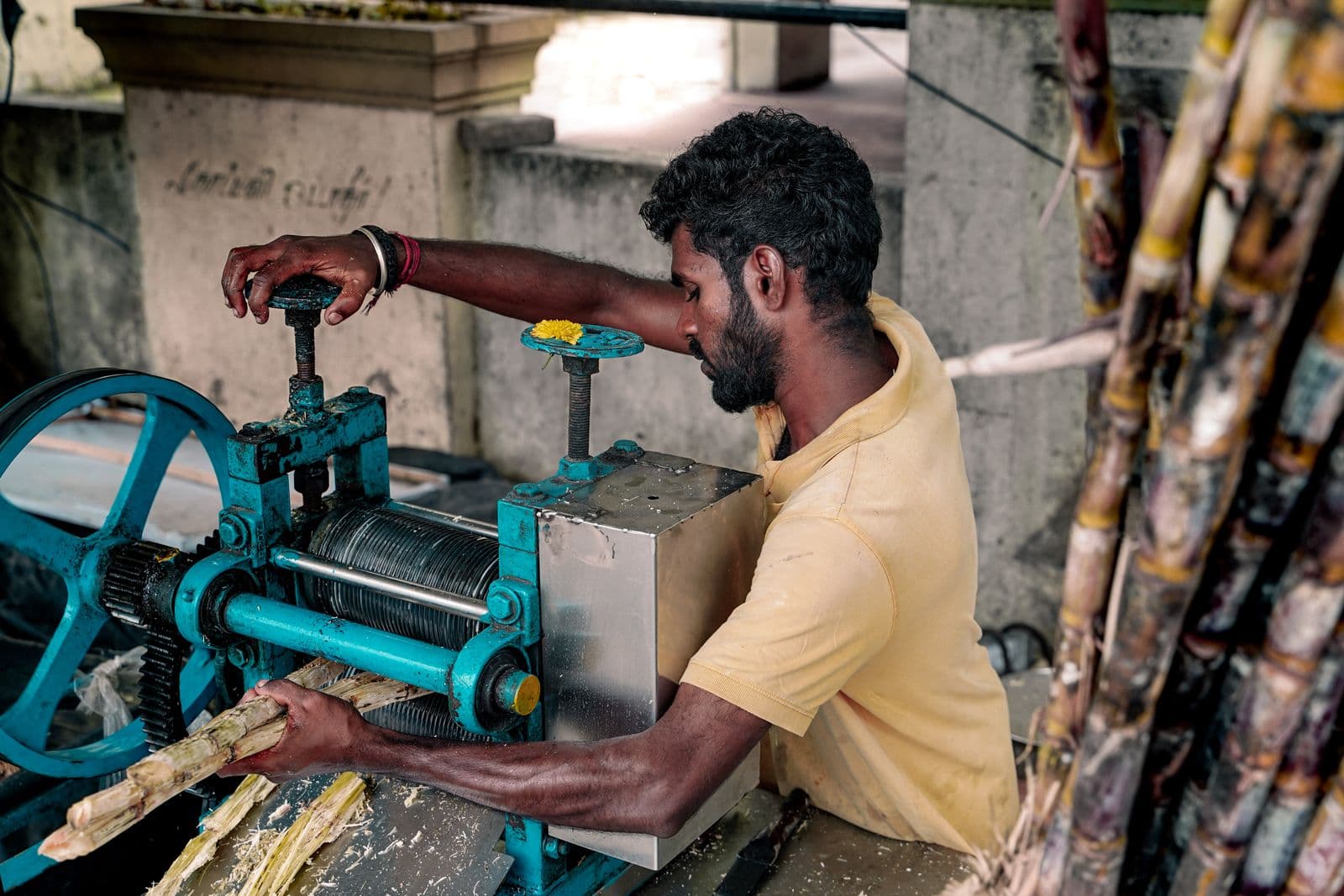
A juice parlour washes and cuts fruit, extracts juice with juicers, presses and pulp extractors and serves it fresh by the glass. Along with apple, orange and mixed juices, it offers local hill flavours — kaafal, plum, amla and burans (rhododendron). A larger version also cooks fruit juice with sugar and pectin into kaafal and burans jellies sold in jars.
Capacity: Juice parlour: 22,000 glasses a year (50–60 a day), sales ₹19.71 lakh. Juice and jelly parlour: 15,000 glasses (50 a day) and 9,000 kg of jelly (30 kg a day), sales ₹24.30 lakh (juice 80%, jelly 20%). Both assume 90% capacity use.
§2Is it right for you?
Who it is for
Someone in a busy market or tourist spot who can buy fresh fruit daily and keep a spotless counter.
Who it is not for
Someone who cannot manage daily fruit buying and wastage, or who wants a business that runs without the owner present.
Advantages
- Very low start-up cost (₹3.39–4.23 lakh)
- Local fruits like kaafal and burans give a unique menu
- Daily cash sales
- Health trend favours fresh juice over bottled drinks
Drawbacks
- Fruit is seasonal and spoils fast
- Kaafal and burans are available only for short periods
- Sales fall in cold months
- Hygiene lapses can bring complaints or penalties
Skills you need
- Fruit buying and quality checks
- Hygienic juice making
- Jelly making with sugar and pectin (for the jelly version)
- Counter sales and pricing
Why difficulty 1/5: Tiny investment and simple equipment; success depends on location and hygiene.
§3Market
Who buys
- Local residents and office-goers
- Tourists seeking local flavours
- Health-conscious customers
How it sells
- Kiosk in a market or tourist spot
- Jars of jelly sold over the counter
- Tie-ups with cafés and homestays
Good to know
- Both profiles stress local fruits — kaafal, plum, amla and burans — as the selling point.
- Supply of fresh fruit on time is named as the main logistical challenge.
§4Raw material & machinery
| Item | Qty | Cost |
|---|---|---|
| Juice extractor | 2–3 | ₹0.30–0.45 lakh |
| Press | 1–3 | ₹0.05–0.15 lakh |
| Pulp extractor | 1–2 | ₹0.20–0.40 lakh |
| Tax, transport and insurance on machines | — | ₹1.00 lakh |
| Electrification | — | ₹0.20 lakh |
| Tools (knives, mixing and heating equipment, juice filling utensils, cleaning tools) | — | ₹0.20 lakh |
| Furniture and set-up (lighting, kiosk or kitchen platform, chairs, shelves) | — | ₹0.50–0.80 lakh |
| Computer (jelly version) | — | ₹0.50 lakh |
From: Uttarakhand DUY project profile — Juice Parlour · Uttarakhand DUY project profile — Juice and Jelly Parlour
- Fresh fruit — apple, orange, kaafal, plum, amla, buransbought locally; raw materials ₹9.86 lakh (juice parlour) to ₹12.15 lakh (juice and jelly) a year
- Sugar, pectin, citric acid or lemon juicefor jellies and flavour balance; natural preservatives optional
From: Uttarakhand DUY project profile — Juice Parlour · Uttarakhand DUY project profile — Juice and Jelly Parlour
In our raw material database
§5Licences & registration
- FSSAI registration or licence
- Trade licence from the local body
- Udyam registration
- GST registration once turnover crosses the limit
- Labelling compliance for packed jellies
§6Schemes & subsidies
- PMEGPCentralActive15–35% subsidy
- PMFMECentralUnclear35% subsidy, up to ₹10 lakh
- MudraCentralActiveLoan up to ₹20 lakh, no collateral
PMEGP covers small projects like this; PMFME can help the jelly-making version as a micro food-processing unit; a MUDRA Shishu loan suits the juice-only kiosk.
§7Money
How the investment is worked out: DUY profiles: juice parlour ₹3.39 lakh (machines ₹1.75 lakh incl. 2 juice extractors, a press and a pulp extractor ₹0.55 lakh plus tax, transport and electrification ₹1.20 lakh; kiosk, furniture and tools ₹1.00 lakh; misc. ₹0.02 lakh; preliminary ₹0.05 lakh; working capital ₹0.57 lakh). Juice and jelly parlour ₹4.23 lakh (machines ₹2.20 lakh incl. 3 juice extractors, 3 presses and 2 pulp extractors ₹1.00 lakh plus ₹1.20 lakh tax, transport and electrification; tools, set-up and computer ₹1.20 lakh; misc. ₹0.02 lakh; preliminary ₹0.10 lakh; working capital ₹0.71 lakh). Premises rented.
Working capital: Working capital only ₹0.57–0.71 lakh — fresh fruit is bought daily and sold the same day.
Year not printed on the DUY (Devbhoomi Udyamita Yojana) profile — check current prices before you buy.
§8Export potential
A local service business — not an export business.
§9Risks — where people fail
- Fruit wastage
- Seasonal dip in sales
- Food safety complaints
- Rising fruit prices
§1030 / 60 / 90-day plan
A general plan that applies to any business. A plan for this business will be added after research.
- Days 1–30: Visit a working fresh juice parlour (with local-fruit jellies) unit, ask 10 buyers about price and quantity, and get quotations from 3 suppliers.
- Days 31–60: Udyam and the licences you need (FSSAI registration or licence, Trade licence from the local body), a project report (DPR), and the scheme or loan file.
- Days 61–90: Space and machines, trial production, and first deliveries to 10 customers.
§11Who to connect with
Associations, clusters and training institutes — the directory is being built. Connect
§12Watch
There is no episode on this business yet. Shows are coming soon on the Podcast page.
Want to start Fresh Juice Parlour (with Local-Fruit Jellies)?
DPR, loan file or registration — ask us on WhatsApp.
¶Sources
- Uttarakhand DUY project profile — Juice Parlour
- Uttarakhand DUY project profile — Juice and Jelly Parlour
Data review: 6 October 2026. Spotted a mistake? Report it. For information only — not legal or financial advice.