

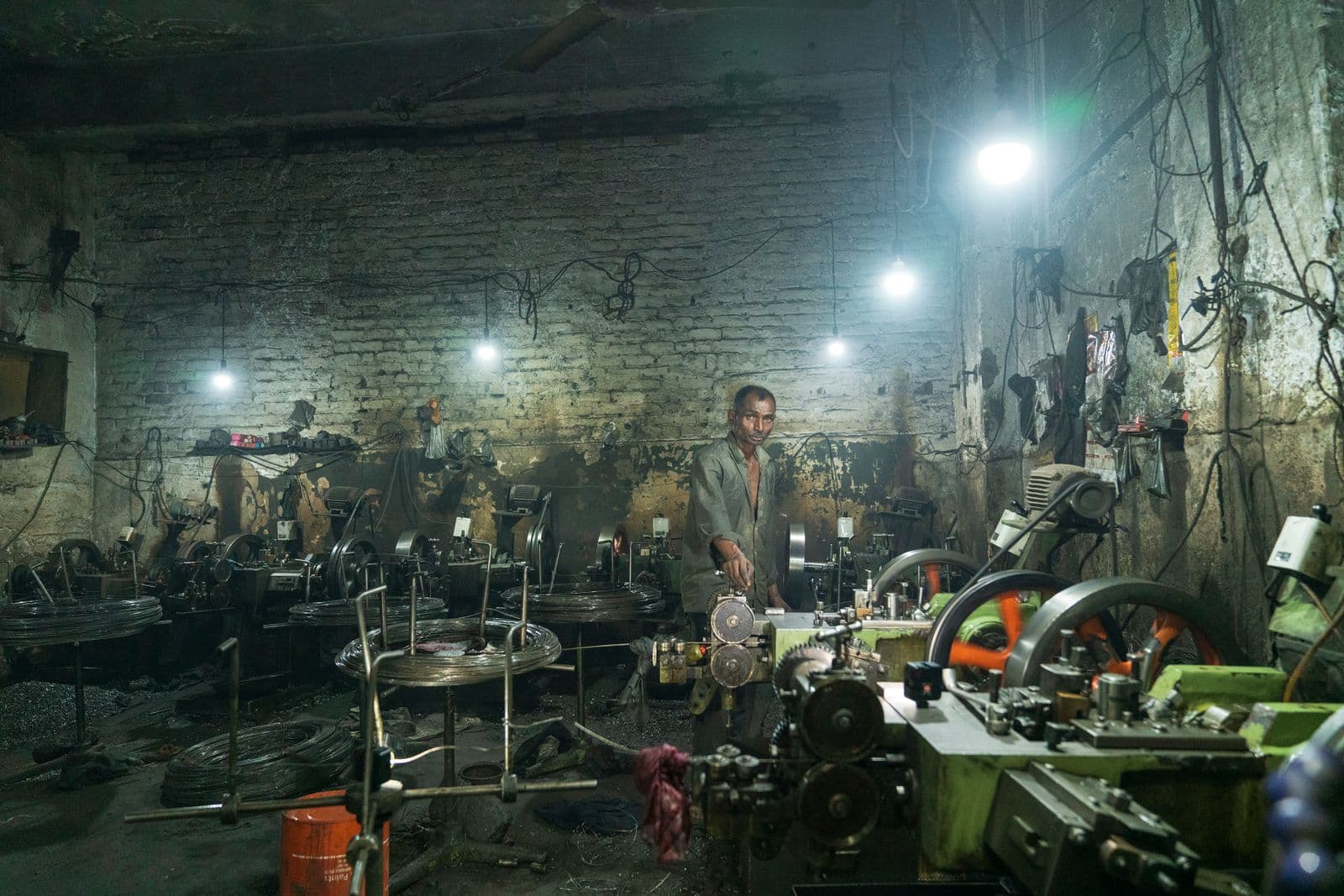
§1What this business is
Katarni paddy is cleaned, de-husked between rubber rolls, polished, graded and packed in 1 kg packets. Katarni is Bihar's best-known scented rice, used for rice dishes, kheer and chura (beaten rice); the DPR says its aroma develops only in a few blocks of Bhagalpur, Munger and Banka districts. Buyers are wholesalers, grocery shops, hotels and households in Bihar and beyond.
Capacity: 500 kg an hour; 12,00,000 kg of paddy a year gives 8,40,000 kg of rice after a 30% milling loss. The DPR starts at 50% (4,20,000 kg) and reaches 70% in year 5.
§2Is it right for you?
Who it is for
A rice miller, trader or FPO in Bhagalpur, Munger or Banka who can buy genuine Katarni paddy.
Who it is not for
Someone outside the Katarni belt — the aroma comes only from local paddy.
Advantages
- A well-known regional speciality with a loyal market in Bihar
- Also sold as chura (beaten rice), per the DPR
- Small machinery bill (₹10.80 L) for a 500 kg-an-hour line
- Fits PMFME, AIF and MUDRA
Drawbacks
- Regional preference — the DPR says popularity outside Bihar is limited
- Thin margin: year-1 gross margin only 10.17%
- Genuine aromatic paddy comes from only a few blocks
- Large turnover needs steady working capital
Skills you need
- Judging paddy aroma, grain and moisture
- Setting the mill to limit broken grains
- Wholesale and retail selling
- Stock management after harvest
Why difficulty 2/5: Simple milling, but thin margins and a narrow paddy belt.
§3Market
Who buys
- Households in Bihar and Bihari families elsewhere
- Wholesalers and grocery shops
- Hotels, restaurants and caterers
- Chura (beaten rice) makers
How it sells
- Wholesale trade
- Grocery and modern retail
- Online sales
Good to know
- The DPR prices a 1 kg packet at ₹32 in year 1, rising ₹2 a year.
- The DPR names Randhunipagal and Badshahbhog of West Bengal as similar regional aromatic rices.
§4Raw material & machinery
| Item | Qty | Cost |
|---|---|---|
| Paddy pre-cleaning machine | 1 | ₹1,50,000 |
| Compact rice mill (de-husking, polishing, grading) | 1 | ₹2,00,000 |
| Rice packaging machine | 1 | ₹3,80,000 |
| Bins, trolley, conveyor, silos, weighing machine, bucket elevator | — | ₹3,50,000 |
From: NIFTEM-K project profile — Katarni Rice Unit (PMFME model DPR) (2022)
- Katarni paddythe only raw material; costed at ₹16 a kg in year 1, rising ₹1 a year
- Packing material1 kg packets
From: NIFTEM-K project profile — Katarni Rice Unit (PMFME model DPR) (2022)
In our raw material database
§5Licences & registration
- FSSAI licence
- Udyam
- GST
- Mandi licence for buying paddy (state rules)
- State Pollution Control Board consent (husk dust)
§6Schemes & subsidies
- PMFMECentralUnclear35% subsidy, up to ₹10 lakh
- AIFCentralUnclear3% interest subvention, up to ₹2 crore
- PMEGPCentralActive15–35% subsidy
- CGTMSECentralActiveNo collateral, up to ₹10 crore
- MudraCentralActiveLoan up to ₹20 lakh, no collateral
PMFME (the DPR is a PMFME model with a 35% subsidy up to ₹10 L), AIF (primary processing), PMEGP and CGTMSE fit. Bank finance in the DPR is ₹14.34 L (term loan ₹7.87 L + working capital ₹6.47 L), within the MUDRA ₹20 L limit.
§7Money
How the investment is worked out: NIFTEM-K PMFME model DPR: total ₹21.49 L = plant & machinery ₹10.80 L + miscellaneous assets ₹3.50 L + working capital ₹7.19 L. Premises rented (rent ₹3.60 L in year 1).
Working capital: Working capital ₹7.19 L (bank limit ₹6.47 L): 7 days of paddy and rice in stock, 10 days' credit to buyers. Paddy is costed at ₹16 a kg in year 1; a 1 kg packet sells at ₹32.
Year not printed in the DPR; NIFTEM-K published it in July 2022 — check current machinery prices.
§8Export potential
Confirm the HS code in the DGFT ITC(HS) lookup before you export
Export council / board: APEDA
- Rice export rules change often — check current DGFT notifications and the 8-digit ITC(HS) line before shipping.
§9Risks — where people fail
- Mixing with ordinary rice damages the name
- Poor harvest in a small growing area
- Thin margins if paddy prices rise
- Changes in rice export rules
§1030 / 60 / 90-day plan
A general plan that applies to any business. A plan for this business will be added after research.
- Days 1–30: Visit a working katarni rice processing unit unit, ask 10 buyers about price and quantity, and get quotations from 3 suppliers.
- Days 31–60: Udyam and the licences you need (FSSAI licence, Udyam), a project report (DPR), and the scheme or loan file.
- Days 61–90: Space and machines, trial production, and first deliveries to 10 customers.
§11Who to connect with
Associations, clusters and training institutes — the directory is being built. Connect
§12Watch
There is no episode on this business yet. Shows are coming soon on the Podcast page.
Want to start Katarni Rice Processing Unit?
DPR, loan file or registration — ask us on WhatsApp.
¶Sources
Data review: 6 October 2026. Spotted a mistake? Report it. For information only — not legal or financial advice.