

§1What this business is
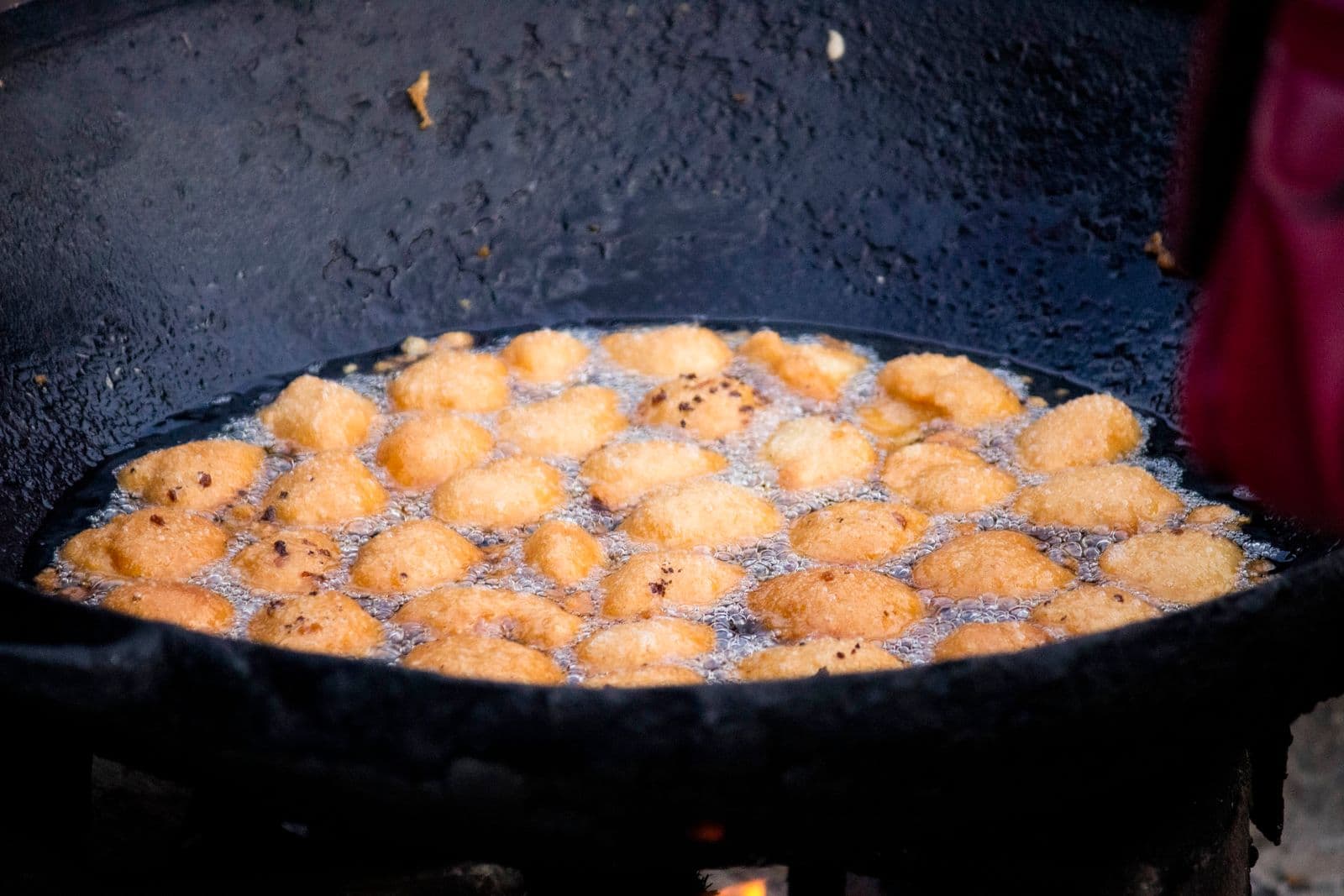
Corn meal, rice flour and besan are mixed with water, pushed through a heated extruder, cut into pieces, fried, coated with masala and packed. The cheapest packs sell at ₹5. Buyers are kirana shops, wholesalers, canteens and pan shops.
Capacity: Smallest unit: input 25 kg an hour, output 15 kg an hour (40% wastage), 36,000 kg a year = 18 lakh 20 g packets. KVIC unit: 235 tonnes a year with a 100 kg/hour extruder.
§2Is it right for you?
Who it is for
Someone with a distributor network among kirana and pan shops.
Who it is not for
Someone who cannot build local distribution — the snack does not sell itself.
Advantages
- Huge everyday demand for cheap snack packs
- Simple raw materials: corn, rice, besan, oil, spices
- Can start small with one extruder
- Fits PMFME as well as PMEGP
Drawbacks
- Big brands own shelf space
- ₹5 packs leave very little margin
- Frying oil and packaging costs move often
- Needs strict hygiene and FSSAI compliance
Skills you need
- Extruder operation and dough moisture control
- Flavour and masala mixing
- Packaging line operation
- Distributor and retailer management
Why difficulty 3/5: Making it is easy; selling against national brands is hard.
§3Market
Who buys
- Households, especially children and young people
- Kirana and pan shops
- Canteens, restaurants and parties
How it sells
- Distributors serving kirana shops
- Wholesale snack markets
- Small retail chains
Good to know
- KVIC says annual demand for extruded snacks is over 2,40,000 tonnes worth over ₹2,400 crore.
- The smallest report sells 20 g packets at ₹5 in year 1.
- Large competitors named in the reports: PepsiCo, Haldiram, Balaji, ITC, Parle.
§4Raw material & machinery
| Item | Qty | Cost |
|---|---|---|
| Kurkure making machine (extruder), input 25–28 kg an hour | 1 | ₹3,50,000 + GST |
| Raw material mixer | 1 | — |
| Kurkure-type extrusion machine | 1 | — |
| Rectangular batch tilting fryer with heat exchanger | 1 | — |
| Flavouring coating pan | 1 | — |
| Automatic packing machine (PLC-based VFFS) | 1 | — |
| Coding machine | 1 | — |
| Total for the six machines above | 1 lot | ₹15,00,000 + GST ₹2,70,000 = ₹17,70,000 |
| Extruder with 30 HP main motor and feed hopper (100 kg/hour), 3 HP mixer, frying bhatti, flavouring system, collar-type VFFS pouch machine (50–60 pouches a minute), 300 lb compressor, nitrogen cylinder, moisture tester, tables, trays, balance | 1 lot | ₹12,20,000 |
From: PMEGP sample project report — Kurkure Making (prepared by Udyami/Samadhan) · PMEGP sample project report — Kurkure Snacks (prepared by Udyami/Samadhan) · KVIC Project Profile — Kurkure Type Snacks (PMEGP)
- Corn (maize) meal₹60–70 a kg in the smallest report
- Rice flour and besancarriers mixed with the corn meal
- Edible vegetable oilfor frying
- Salt, chilli, turmeric, onion powder, ginger powder, pepperfor the seasoning
- Printed pouches and cartons₹75,000 a year for labels and packing in the KVIC profiles
From: PMEGP sample project report — Kurkure Making (prepared by Udyami/Samadhan) · PMEGP sample project report — Kurkure Snacks (prepared by Udyami/Samadhan) · KVIC Project Profile — Kurkure Type Snacks (PMEGP)
§5Licences & registration
- FSSAI licence
- Udyam registration
- GST
- Fire NOC
- Legal Metrology registration for pre-packed goods
- Trademark for your brand (optional)
§6Schemes & subsidies
- PMFMECentralUnclear35% subsidy, up to ₹10 lakh
- PMEGPCentralActive15–35% subsidy
- MudraCentralActiveLoan up to ₹20 lakh, no collateral
- CGTMSECentralActiveNo collateral, up to ₹10 crore
- Stand-Up IndiaCentralClosed₹10 lakh – ₹1 crore loan
PMFME (micro food processing) and PMEGP both fit; MUDRA covers the smaller units up to ₹20 L; CGTMSE covers collateral-free loans; Stand-Up India for SC/ST or women owners above ₹10 L.
§7Money
How the investment is worked out: Four PMEGP reports. Smallest: Samadhan 'Kurkure Making' ₹7.42 L (machinery ₹4.25 L, furniture & other assets ₹0.50 L, working-capital margin ₹2.67 L). KVIC small unit ₹11.69 L (shed ₹0.40 L, equipment ₹6.00 L, WC ₹5.29 L). KVIC unit ₹24.70 L (equipment ₹12.20 L, WC ₹12.50 L). Largest: Samadhan 'Kurkure Snacks' ₹24.87 L (machinery ₹17.70 L incl. 18% GST, furniture ₹0.25 L, misc ₹0.25 L, WC ₹6.67 L).
Working capital: Working capital from ₹2.67 L (smallest) to ₹12.50 L (KVIC unit); raw material is ₹50.00 L to ₹139.90 L a year in the KVIC profiles.
Year not printed on the KVIC profile or the sample report — check current machinery prices.
§8Export potential
Confirm the HS code in the DGFT ITC(HS) lookup before you export
Export council / board: APEDA
- Extruded snacks fall under APEDA's processed foods group.
- Export packs need longer shelf life — nitrogen flushing helps.
§9Risks — where people fail
- Competition from national brands
- Oil price rises
- Short shelf life if packing is poor
- Food-safety failures
§1030 / 60 / 90-day plan
A general plan that applies to any business. A plan for this business will be added after research.
- Days 1–30: Visit a working kurkure-type extruded snacks unit, ask 10 buyers about price and quantity, and get quotations from 3 suppliers.
- Days 31–60: Udyam and the licences you need (FSSAI licence, Udyam registration), a project report (DPR), and the scheme or loan file.
- Days 61–90: Space and machines, trial production, and first deliveries to 10 customers.
§11Who to connect with
Associations, clusters and training institutes — the directory is being built. Connect
§12Watch
There is no episode on this business yet. Shows are coming soon on the Podcast page.
Want to start Kurkure-type Extruded Snacks?
DPR, loan file or registration — ask us on WhatsApp.
¶Sources
- PMEGP sample project report — Kurkure Snacks (prepared by Udyami/Samadhan)
- PMEGP sample project report — Kurkure Making (prepared by Udyami/Samadhan)
- KVIC Project Profile — Kurkure Type Snacks (PMEGP)
- KVIC Project Profile — Kurkure Type Snacks Small (PMEGP)
Data review: 6 October 2026. Spotted a mistake? Report it. For information only — not legal or financial advice.