

§1What this business is
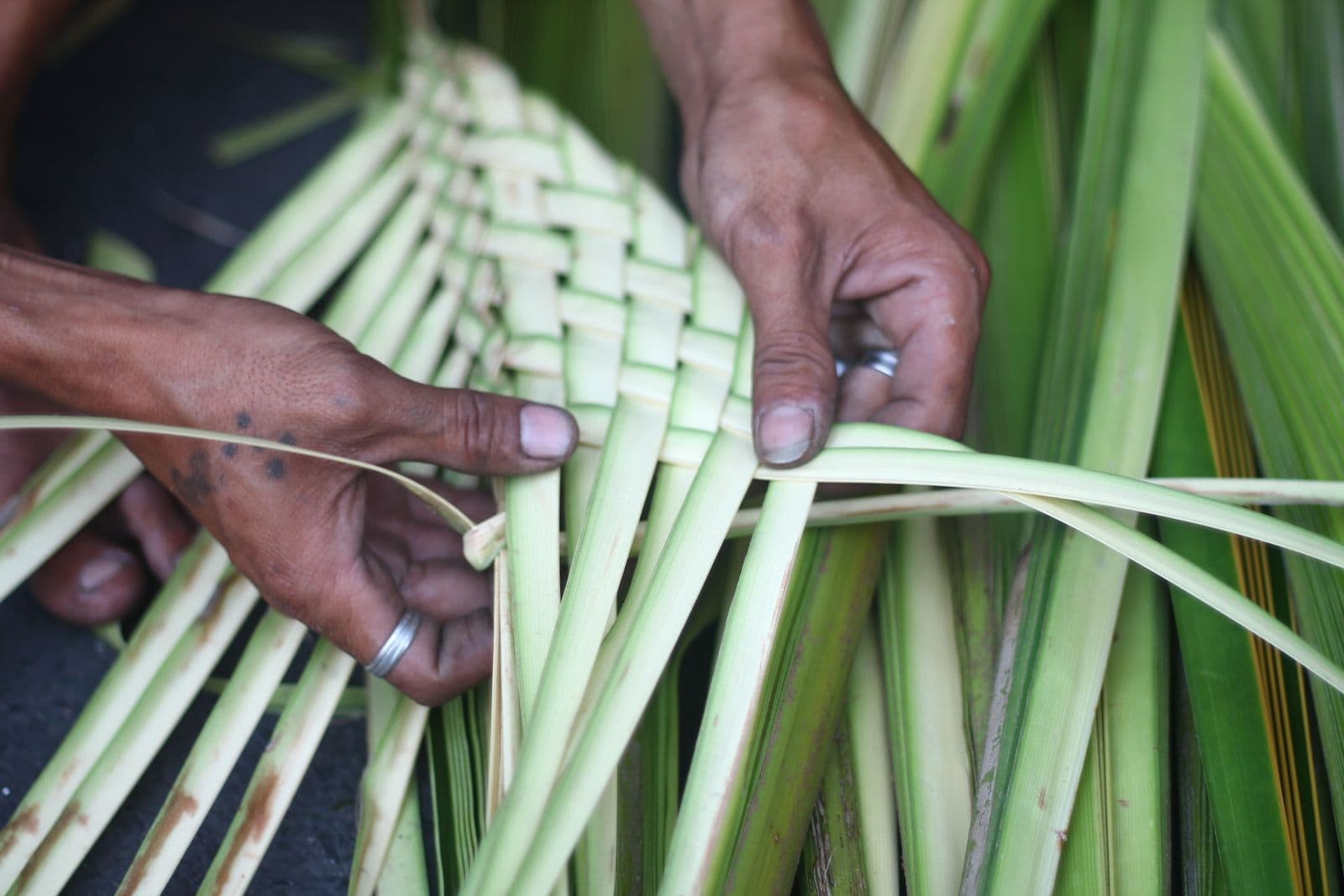
Moonj grass is wound around kaasa grass to make a coil, and the coils are stitched into baskets, bags, pen stands, table mats and wall pieces. Part of the grass is dyed red or green to make patterns. It is a hand craft with simple tools, practised mostly by women in Prayagraj, Amethi and Sultanpur districts. Traders from Delhi, Varanasi and Lucknow buy, and goods go to Mumbai, Delhi, Banaras and Kanpur.
Capacity: Decorative items: 100 pieces a day. Baskets & bags: 30 pieces a day. Both start at 50% capacity in year 1, 10-hour shift.
§2Is it right for you?
Who it is for
Someone in a moonj-growing area of eastern UP who can organise women artisans and find city or online buyers.
Who it is not for
Someone who wants machine-made volume or quick profits.
Advantages
- Very low machinery cost — mostly hand tools
- Eco-friendly product with gift and wedding demand
- Gives home-based work to rural women
- Local raw material from riverbank grass
Drawbacks
- Each piece is handmade, so big orders are hard to fill
- Labour is the main cost; profit per piece is small
- Grass must be bought once a year in bulk
- Depends on traders for city and export sales
Skills you need
- Coiling and stitching technique
- Dyeing with fast colours
- Organising and paying home-based artisans
- Design for city and gift buyers
Why difficulty 2/5: Tools are cheap, but managing artisans and finding buyers takes effort.
§3Market
Who buys
- Traders from Delhi, Varanasi and Lucknow
- City shoppers and gift buyers
- Families buying for weddings and rituals
How it sells
- Local traders who place advance orders before weddings and festivals
- Supply to big-city markets (Mumbai, New Delhi, Banaras, Kanpur)
- Craft platforms that link artisans to buyers
Good to know
- Traders place advance orders in the wedding and festival season.
- Each piece is one of a kind, which makes mass orders hard.
§4Raw material & machinery
| Item | Qty | Cost |
|---|---|---|
| Hand tools: scissors, sirahi (needle with wooden handle), plastic soaking tubs, aluminium dyeing pots, wooden stirring sticks, measuring spoon, bins | 1 set | ₹20,000–22,000 (decorative-items report); ₹25,000–28,000 (baskets & bags report) |
From: PMEGP sample project report — Monj Decorative Items (prepared by Udyami/Samadhan)
- Moonj and kaasa grassbought in bulk once a year from Mehwa and nearby areas; October is the best month
- Kachcha rang (dye powder)available in local markets
- Edible saltadded to the dye bath so the colour lasts
- Raw material cost per piece₹120–150 per decorative item; ₹800–900 per bag; ₹400–500 per basket
From: PMEGP sample project report — Monj Decorative Items (prepared by Udyami/Samadhan) · PMEGP sample project report — Moonj Baskets & Bags (prepared by Udyami/Samadhan)
§5Licences & registration
- Udyam
- GST
- Artisan identity card (Pehchan) from the Development Commissioner (Handicrafts)
- Trade licence from the local body
§6Schemes & subsidies
- PMEGPCentralActive15–35% subsidy
- MudraCentralActiveLoan up to ₹20 lakh, no collateral
- CGTMSECentralActiveNo collateral, up to ₹10 crore
PMEGP (these are PMEGP sample reports), MUDRA (bank finance under ₹20 L) and CGTMSE fit.
§7Money
How the investment is worked out: Two PMEGP sample reports. Decorative items ₹9.13 L = shed (1,000 sq ft) ₹5.00 L + furniture ₹0.80 L + working capital ₹3.33 L. Baskets & bags ₹11.16 L = shed ₹5.00 L + furniture ₹0.60 L + working capital ₹5.56 L. Land own or rented; hand tools ₹20,000–28,000 extra.
Working capital: Grass is bought in bulk once a year (October is the best month), so cash is locked in stock for months. Working capital ₹3.33 L (decorative) and ₹5.56 L (baskets & bags).
Year not printed on the report — check current machinery prices.
§8Export potential
Confirm the HS code in the DGFT ITC(HS) lookup before you export
Export council / board: EPCH
- Handicraft exports go through the Export Promotion Council for Handicrafts (EPCH).
§9Risks — where people fail
- Uneven quality across artisans
- Order delays in wedding and festival peaks
- Cheaper plastic look-alikes
- Damp storage spoiling grass stock
§1030 / 60 / 90-day plan
A general plan that applies to any business. A plan for this business will be added after research.
- Days 1–30: Visit a working moonj grass baskets, bags and decorative items unit, ask 10 buyers about price and quantity, and get quotations from 3 suppliers.
- Days 31–60: Udyam and the licences you need (Udyam, GST), a project report (DPR), and the scheme or loan file.
- Days 61–90: Space and machines, trial production, and first deliveries to 10 customers.
§11Who to connect with
Associations, clusters and training institutes — the directory is being built. Connect
§12Watch
There is no episode on this business yet. Shows are coming soon on the Podcast page.
Want to start Moonj Grass Baskets, Bags and Decorative Items?
DPR, loan file or registration — ask us on WhatsApp.
¶Sources
- PMEGP sample project report — Monj Decorative Items (prepared by Udyami/Samadhan)
- PMEGP sample project report — Moonj Baskets & Bags (prepared by Udyami/Samadhan)
Data review: 6 October 2026. Spotted a mistake? Report it. For information only — not legal or financial advice.