

§1What this business is
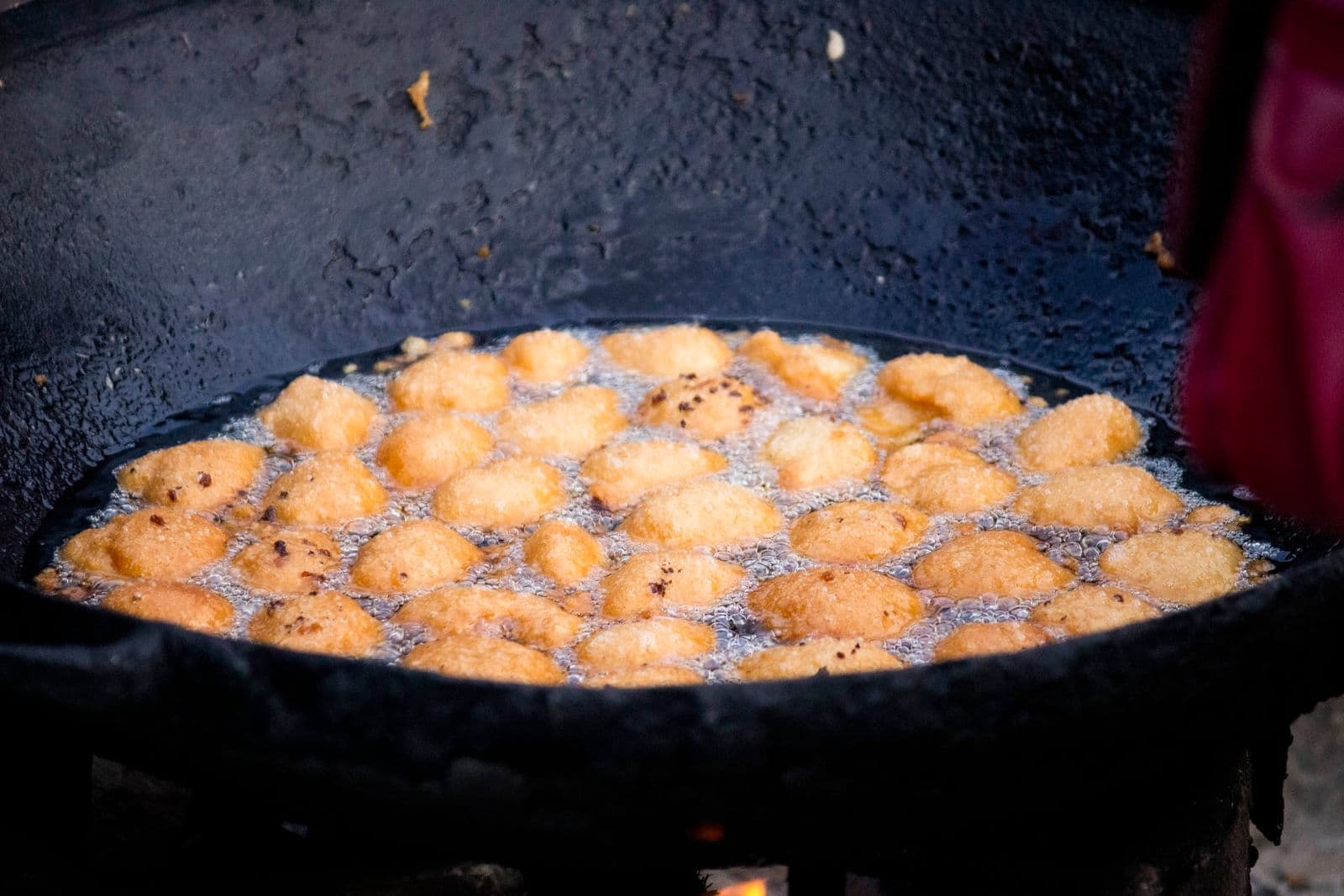
Moth bean (matki) is a drought-hardy pulse grown mainly in Rajasthan. In this unit the beans are cleaned on a vibrating screen and a magnetic separator. Besan dough is kneaded and pushed through a namkeen extruder to make bhujia. The beans and the bhujia are deep-fried separately, passed through a hot-air dryer to cool and shed oil, mixed with spices and salt in a paddle mixer, and packed. The DPR packs the output in 1 kg packets.
Capacity: 100 kg an hour, 800 kg a day in an 8-hour shift, 300 days a year. After 5% wastage the output is 2,28,000 kg a year at full capacity; year 1 is taken at 40%, which is 91,200 kg.
§2Is it right for you?
Who it is for
A namkeen maker or food trader, best placed near moth-growing areas, who has shop distribution.
Who it is not for
Someone with no distributor network or no experience of frying on a large scale.
Advantages
- Namkeen sells every day through kirana shops and tea stalls
- Moth is a high-protein pulse, which helps sell it as a better snack
- The DPR counts a PMFME subsidy of ₹10.00 L on the project
- The same fryer and mixer can make other namkeen mixes
Drawbacks
- The frying machine alone costs ₹14.00 L
- Needs 3,000–4,000 sq ft and 16 staff
- Frying oil is costly and its price changes often
- Large namkeen brands and local makers compete in every market
Skills you need
- Frying at the right temperature and managing oil quality
- Seasoning to a steady taste
- Food hygiene and FSSAI labelling
- Building distributors and retail reach
Why difficulty 3/5: Standard namkeen process, but a larger outlay and a crowded market.
§3Market
Who buys
- Households, through kirana shops
- Tea stalls, sweet shops and caterers
- Buyers of snacks for parties, picnics and gatherings
How it sells
- Distributors and wholesalers
- Direct supply to retail shops
- Local vendors
Good to know
- The DPR says demand is rising for high-protein, high-fibre namkeen made from local grains.
- The DPR takes a sale price of ₹150 for a 1 kg packet in year 1; the nine machinery lines add up to ₹26.70 lakh.
§4Raw material & machinery
| Item | Qty | Cost |
|---|---|---|
| Vibrating screen separator | 1 | ₹1,20,000 |
| Planetary mixer | 1 | ₹3,00,000 |
| Namkeen extruder | 1 | ₹1,00,000 |
| Frying machine | 1 | ₹14,00,000 |
| Hot air dryer | 1 | ₹1,50,000 |
| Paddle mixer | 1 | ₹1,30,000 |
| Magnetic separator | 1 | ₹40,000 |
| Packaging machine | 1 | ₹2,80,000 |
| Material handling and other equipment (bins, trolley, weighing machine) | — | ₹1,50,000 |
From: NIFTEM-K PMFME model DPR — Moth Beans Processing Unit (RTE Moth Snacks) (2022)
- Moth beansthe main raw material; Rajasthan is the major growing State
- Frying oil
- Besan (gram flour)kneaded and extruded into bhujia
- Dry fruits, seasoning and other whole grains
- Preservativesused in small amounts
From: NIFTEM-K PMFME model DPR — Moth Beans Processing Unit (RTE Moth Snacks) (2022)
§5Licences & registration
- Udyam registration
- GST registration
- FSSAI licence or registration
- Trade licence from the local body
- Legal Metrology registration for packed goods
- Fire safety clearance and pollution control board consent where the State asks for them
Start it in your state
Pick your state: today’s cost, central + state subsidy, raw material, land and help, on one page.
§6Schemes & subsidies
- PMFMECentralUnclear35% subsidy, up to ₹10 lakh
- PMEGPCentralActive15–35% subsidy
- CGTMSECentralActiveNo collateral, up to ₹10 crore
The DPR is written for PMFME: a 35% subsidy capped at ₹10 L, and this project gets the full ₹10 L. The ₹36.89 L project is also within PMEGP's ₹50 L limit for manufacturing; you can take only one of these subsidies. CGTMSE can cover the bank loan without collateral.
§7Money
How the investment is worked out: Total project cost ₹36.89 L: machinery and equipment ₹26.70 L + miscellaneous fixed assets ₹2.50 L + working capital ₹7.69 L. Land and building are nil; the premises are rented. Finance: own contribution ₹3.90 L, PMFME subsidy ₹10.00 L, term loan ₹16.06 L, working capital loan ₹6.92 L. Machinery cost excludes GST and transport.
Working capital: Working capital is ₹7.69 L, with a bank limit of ₹6.92 L. Raw material is held for 10 days and finished goods for 7 days; buyers get 10 days of credit and suppliers give 7 days.
Year not printed on the report — check current machinery and material prices.
§8Export potential
Export council / board: APEDA
- The DPR prints no HS code and does not plan for exports.
§9Risks — where people fail
- Edible oil and moth prices rising
- Namkeen turning rancid from poor packing or old oil
- Fire and burn hazards around the fryer
- Credit stuck with distributors
§1030 / 60 / 90-day plan
A general plan that applies to any business. A plan for this business will be added after research.
- Days 1–30: Visit a working moth bean namkeen (ready-to-eat moth snacks) unit unit, ask 10 buyers about price and quantity, and get quotations from 3 suppliers.
- Days 31–60: Udyam and the licences you need (Udyam registration, GST registration), a project report (DPR), and the scheme or loan file.
- Days 61–90: Space and machines, trial production, and first deliveries to 10 customers.
§11Who to connect with
§12Watch
There is no episode on this business yet. Shows are coming soon on the Podcast page.
Want to start Moth Bean Namkeen (Ready-to-Eat Moth Snacks) Unit?
DPR, loan file or registration — ask us on WhatsApp.
¶Sources
Data review: 6 October 2026. Spotted a mistake? Report it. For information only — not legal or financial advice.