

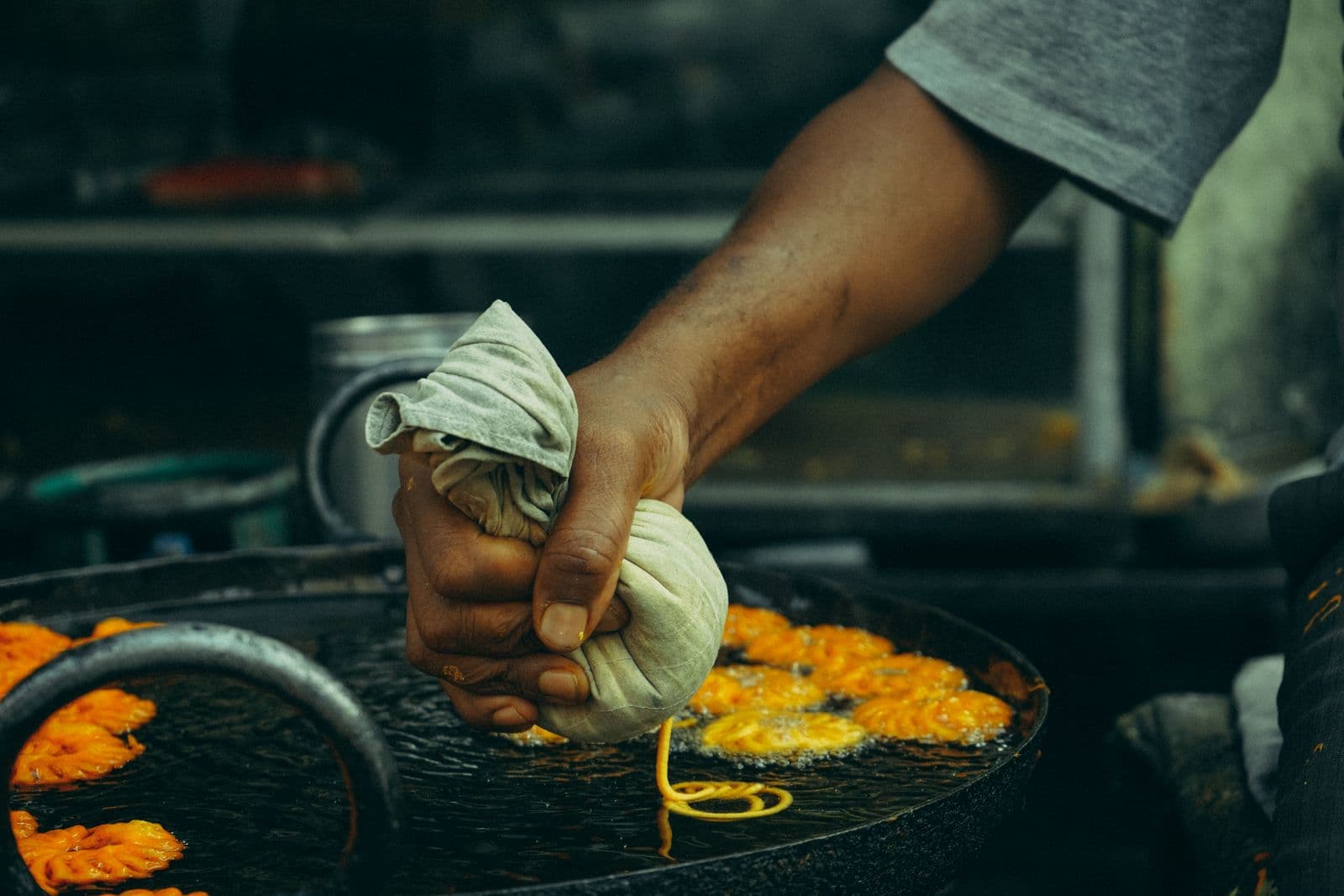
§1What this business is
Ripe ash gourd (white pumpkin) is peeled, cut, pricked and soaked in lime water, then cooked in sugar syrup and flavoured (kesar, angoori, kewda, coconut, dry fruit). It sells through sweet shops, wholesalers and to travellers. Agra petha has a GI tag.
Capacity: Small KVIC unit: 76 quintals a year. Automatic unit: 1,000 kg a day, 3,00,000 kg a year on one 10-hour shift; year 1 at 50%, sold at ₹45 a kg.
§2Is it right for you?
Who it is for
A sweet maker or family business in UP or North India with local shops and travellers to sell to.
Who it is not for
Someone outside petha-eating areas with no plan to reach buyers.
Advantages
- A well-known sweet with steady demand in North India
- Agra petha has a GI tag
- Raw materials — ash gourd and sugar — are cheap and local
- Can start very small and grow
Drawbacks
- Low price per kg (₹45 in the automatic-unit report)
- Ash gourd supply is seasonal
- Many local makers compete on price
- Food-safety inspections and hygiene rules
Skills you need
- Traditional recipe (lime soaking, sugar syrup)
- Hygiene and FSSAI compliance
- Packing for travel and gifting
- Selling to sweet shops and at stations
Why difficulty 2/5: Simple traditional process; the work is in selling and hygiene.
§3Market
Who buys
- Sweet shops
- Tourists and travellers (Agra, Mathura, railway stations)
- Households for festivals and gifts
How it sells
- Own shop
- Supply to sweet shops and wholesalers
Good to know
- KVIC names Agra, Mathura, Lucknow and Meerut as petha centres.
- Flavoured variants (kesar, angoori, chocolate, paan) widen the market (Samadhan).
- The second KVIC profile prints its production line as "roasted and salted cashewnuts" — a copying error; its cost lines are for petha.
§4Raw material & machinery
| Item | Qty | Cost |
|---|---|---|
| Diesel bhatti with blower | — | — |
| Boiler | — | — |
| Exhaust fan | — | — |
| Washing/storing drums | — | — |
| SS-top working table | — | — |
| SS vessels, small utensils, balance | — | — |
| Polythene sealing machine | — | — |
| Equipment for the small KVIC unit (total) | — | ₹50,000 |
| Automatic petha plant | 1 | ₹9,00,000 |
| 52-inch petha kettle | 3 | ₹2,40,000 (₹80,000 each) |
| Utensils, weighing machine etc. | — | ₹30,000 |
| Taxes, freight etc. (15%) | — | ₹1,75,500 |
| Electric drier with trays, tables, balances, fans, drums, stoves, sealer (larger KVIC unit, total) | — | ₹1,25,000 |
From: KVIC Project Profile — Petha Manufacturing Unit (PMEGP) · PMEGP sample project report — Petha Manufacturing (Automatic) (prepared by Udyami/Samadhan) · KVIC Project Profile — Petha Manufacturing (PMEGP)
- Ash gourd (white pumpkin / petha fruit)fully ripe fruit with tough texture (KVIC)
- Sugarfor the syrup, with water (listed raw material)
- Lime (calcium hydroxide)pieces soaked 3–4 hours in fresh quick-lime solution (KVIC)
- Milk, lemon juice, rose waterlisted in the automatic-unit report
- Flavours: kesar, kewda, coconut, dry fruitfor flavoured variants
From: KVIC Project Profile — Petha Manufacturing (PMEGP) · PMEGP sample project report — Petha Manufacturing (Automatic) (prepared by Udyami/Samadhan)
§5Licences & registration
- FSSAI registration or licence
- Udyam
- GST
- Trade licence from the local body
§6Schemes & subsidies
- PMEGPCentralActive15–35% subsidy
- PMFMECentralUnclear35% subsidy, up to ₹10 lakh
- MudraCentralActiveLoan up to ₹20 lakh, no collateral
- CGTMSECentralActiveNo collateral, up to ₹10 crore
- CM YUVAUPActiveUp to ₹5 lakh, interest-free
PMEGP (all three are PMEGP profiles); PMFME for micro food units; MUDRA up to ₹20 L; CM-YUVA (UP) fits the ₹1.87 L small unit; CGTMSE for collateral-free credit.
§7Money
How the investment is worked out: KVIC profile (small unit): shed 500 sq ft ₹1.00 L, equipment ₹0.50 L, working capital ₹0.37 L = ₹1.87 L. Samadhan automatic unit: building ₹2.00 L, plant & machinery ₹13.46 L, furniture ₹0.50 L, working capital ₹5.56 L = ₹21.52 L. A second KVIC profile (listed as "Petha Manacturing") costs ₹7.25 L (2,000 sq ft shed ₹4.00 L, equipment ₹1.25 L, working capital ₹2.00 L).
Working capital: ₹0.37 L (small KVIC unit), ₹2.00 L (larger KVIC unit), ₹5.56 L (automatic unit).
Year not printed on the KVIC profile — check current machinery prices.
§8Export potential
Confirm the HS code in the DGFT ITC(HS) lookup before you export
Export council / board: APEDA
- HS codes are from the WCO HS 2022 list; confirm the 8-digit ITC(HS) line with DGFT or your customs broker.
- You need an Import Export Code (IEC) from DGFT before the first shipment.
§9Risks — where people fail
- Sugar price rise
- Food-safety lapses
- Competition from established Agra brands
- Spoilage in humid weather
§1030 / 60 / 90-day plan
A general plan that applies to any business. A plan for this business will be added after research.
- Days 1–30: Visit a working petha (ash-gourd sweet) making unit, ask 10 buyers about price and quantity, and get quotations from 3 suppliers.
- Days 31–60: Udyam and the licences you need (FSSAI registration or licence, Udyam), a project report (DPR), and the scheme or loan file.
- Days 61–90: Space and machines, trial production, and first deliveries to 10 customers.
§11Who to connect with
Associations, clusters and training institutes — the directory is being built. Connect
§12Watch
There is no episode on this business yet. Shows are coming soon on the Podcast page.
Want to start Petha (Ash-Gourd Sweet) Making?
DPR, loan file or registration — ask us on WhatsApp.
¶Sources
- KVIC Project Profile — Petha Manufacturing Unit (PMEGP)
- PMEGP sample project report — Petha Manufacturing (Automatic) (prepared by Udyami/Samadhan)
- KVIC Project Profile — Petha Manufacturing (PMEGP)
Data review: 6 October 2026. Spotted a mistake? Report it. For information only — not legal or financial advice.