

§1What this business is
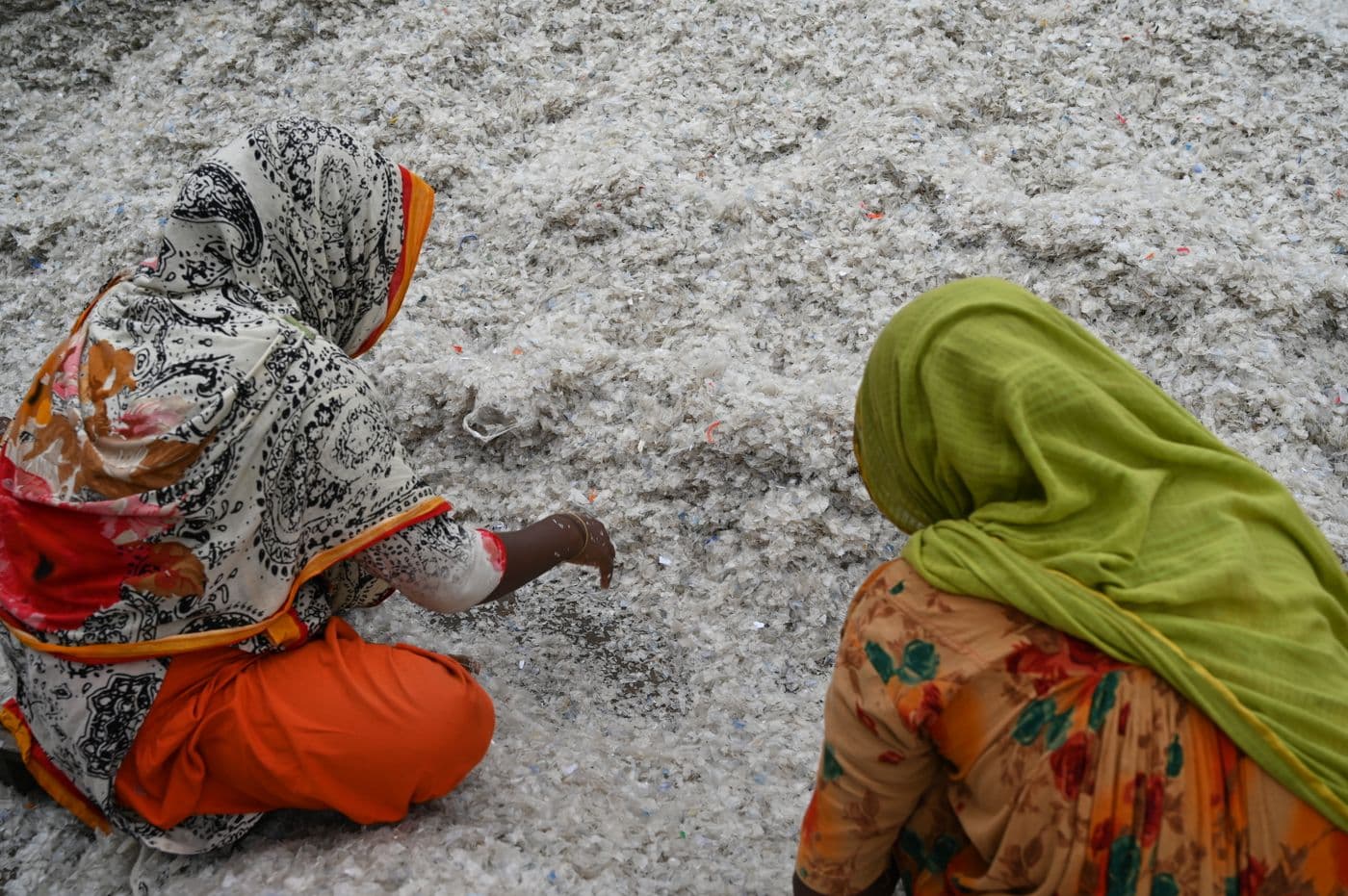
You buy plastic scrap — hard plastic such as buckets and mugs, or soft plastic such as poly bags — then shred, grind, wash and dry it, melt it in an extruder and cut it into pellets (granules). Traders and plastic moulding units buy the granules to make buckets, mugs and poly bags.
Capacity: Extruder output 100 kg an hour, 800 kg a day, 2,40,000 kg a year at full capacity (15% of input is lost); year 1 is planned at 50%.
§2Is it right for you?
Who it is for
Someone who knows the scrap trade and can run a noisy, labour-heavy shop floor.
Who it is not for
Someone looking for a clean, low-power business or who cannot handle pollution-board paperwork.
Advantages
- Scrap plastic is cheap and found in every town
- Moulding units buy granules steadily as a cheaper input than new plastic
- Helps clean up local waste — waste pickers and scrap dealers are ready suppliers
- The report shows break-even at only 22% of capacity
Drawbacks
- Heavy power bill — electricity is one of the biggest costs
- Scrap quality varies; dirty or mixed plastic lowers output and price
- Smoke, waste water and smell need pollution controls
- Granule prices follow new-plastic prices, which swing with crude oil
Skills you need
- Sorting plastics by type (PP, HDPE, LDPE, PVC)
- Running and maintaining grinders and extruders
- Buying scrap at the right price
- Selling to moulders and traders
Why difficulty 3/5: Simple machines, but scrap buying, power cost and pollution rules need close control.
§3Market
Who buys
- Plastic moulding units making buckets, mugs and poly bags
- Granule traders and wholesalers
How it sells
- Direct sale to moulding units
- Through scrap and granule traders
Good to know
- The report sells granules at ₹70 per kg in year 1, rising ₹2 a year.
- Hard plastic gives more output per hour than soft film.
§4Raw material & machinery
| Item | Qty | Cost |
|---|---|---|
| Grinder 8 inch, 30–50 kg/h, 20 HP | 1 | ₹75,000 |
| Grinder 18 inch, 300–400 kg/h, 25 HP | 1 | ₹3,00,000 |
| Grinder 40 inch, 1 tonne/h, 80 HP | 1 | ₹7,50,000 |
| Dust cleaner drum (24 inch, 20 HP) | 1 | ₹1,50,000 |
| Dust cleaner drum (8 ft, 20 HP) | 1 | ₹1,50,000 |
| Boat-type conveyor washing plant (3 HP) | 1 | ₹2,00,000 |
| Round drum washer (30 HP) | 1 | ₹1,80,000 |
| Hydro dryer (3 HP) | 1 | ₹90,000 |
| Film dryer (20 HP) | 1 | ₹2,50,000 |
| Mixer machine (30 HP) | 1 | ₹1,50,000 |
| Agglomerator plant (50 HP) | 1 | ₹2,50,000 |
| Recycling extruder for PP/HM/HDPE/LLDPE/PVC (25 HP, 100–150 kg/h) | 1 | ₹8,50,000 |
From: PMEGP sample project report — Plastic Waste Recycling (prepared by Udyami/Samadhan)
- Plastic scrap — cheap quality₹7–8 per kg in the report
- Plastic scrap — good quality₹10–12 per kg; the projections use ₹10 per kg in year 1
- Water for washingused in conveyor and drum washing
From: PMEGP sample project report — Plastic Waste Recycling (prepared by Udyami/Samadhan)
Suppliers in Building Business Bazaar
CIPET Institute of Petrochemicals Technology (IPT) - Ahmedabad · Ahmedabad →CIPET Institute of Petrochemicals Technology (IPT) - Bhubaneswar · Bhubaneswar →CIPET Institute of Petrochemicals Technology (IPT) - Bihta · Bihta →CIPET Institute of Petrochemicals Technology (IPT) - Chennai · Chennai →CIPET Institute of Petrochemicals Technology (IPT) - Kochi · Kochi →CIPET Institute of Petrochemicals Technology (IPT) - Lucknow · Lucknow →CIPET Institute of Petrochemicals Technology (IPT) - Raipur · Raipur →CIPET Institute of Petrochemicals Technology (IPT) - Jaipur · Jaipur →CIPET Institute of Petrochemicals Technology (IPT) - Murthal · Murthal →CIPET Centre for Skilling and Technical Support (CSTS) - Amritsar · Amritsar →CIPET Centre for Skilling and Technical Support (CSTS) - Agartala · Agartala →CIPET Centre for Skilling and Technical Support (CSTS) - Ayodhya · Ayodhya →
In our raw material database
§5Licences & registration
- Udyam registration
- GST
- Pollution control board consent to establish and operate
- Registration as a plastic waste recycler with the state pollution control board (Plastic Waste Management Rules)
- Fire NOC
- Trade licence from the local body
§6Schemes & subsidies
- PMEGPCentralActive15–35% subsidy
- MudraCentralActiveLoan up to ₹20 lakh, no collateral
- CGTMSECentralActiveNo collateral, up to ₹10 crore
- Stand-Up IndiaCentralClosed₹10 lakh – ₹1 crore loan
A ₹29.60 L manufacturing project: inside PMEGP's ₹50 L limit; MUDRA can fund up to ₹20 L of it; CGTMSE for a collateral-free loan; Stand-Up India for SC/ST and women promoters.
§7Money
How the investment is worked out: Plant & machinery ₹24.60 L + furniture & other assets ₹4.00 L + working-capital margin ₹1.00 L = ₹29.60 L (bank term loan ₹21.45 L, own ₹8.15 L), plus a ₹3 L working-capital limit. Premises rented.
Working capital: Bank working-capital limit ₹3 L; the report keeps 12 days of raw material and of finished stock.
Year not printed on the report; it quotes 2018–2019 market figures — check current machinery prices.
§8Export potential
Confirm the HS code in the DGFT ITC(HS) lookup before you export
Export council / board: PLEXCONCIL (Plastics Export Promotion Council)
- Recycled granules of a single plastic are classed with primary forms (headings 39.01–39.14), not as scrap (39.15) — WCO Chapter 39, Note 7.
- HS codes are from the WCO HS 2022 list; confirm the 8-digit ITC(HS) line with DGFT or your customs broker.
- You need an Import Export Code (IEC) from DGFT before the first shipment.
§9Risks — where people fail
- Pollution-board action if washing water or fumes are not controlled
- Mixed or wet scrap cutting output
- A fall in new-plastic prices squeezing margins
- Fire in the scrap yard
§1030 / 60 / 90-day plan
A general plan that applies to any business. A plan for this business will be added after research.
- Days 1–30: Visit a working plastic waste recycling (granules) unit, ask 10 buyers about price and quantity, and get quotations from 3 suppliers.
- Days 31–60: Udyam and the licences you need (Udyam registration, GST), a project report (DPR), and the scheme or loan file.
- Days 61–90: Space and machines, trial production, and first deliveries to 10 customers.
§11Who to connect with
Associations, clusters and training institutes — the directory is being built. Connect
§12Watch
There is no episode on this business yet. Shows are coming soon on the Podcast page.
Want to start Plastic Waste Recycling (Granules)?
DPR, loan file or registration — ask us on WhatsApp.
¶Sources
Data review: 6 October 2026. Spotted a mistake? Report it. For information only — not legal or financial advice.