

§1What this business is
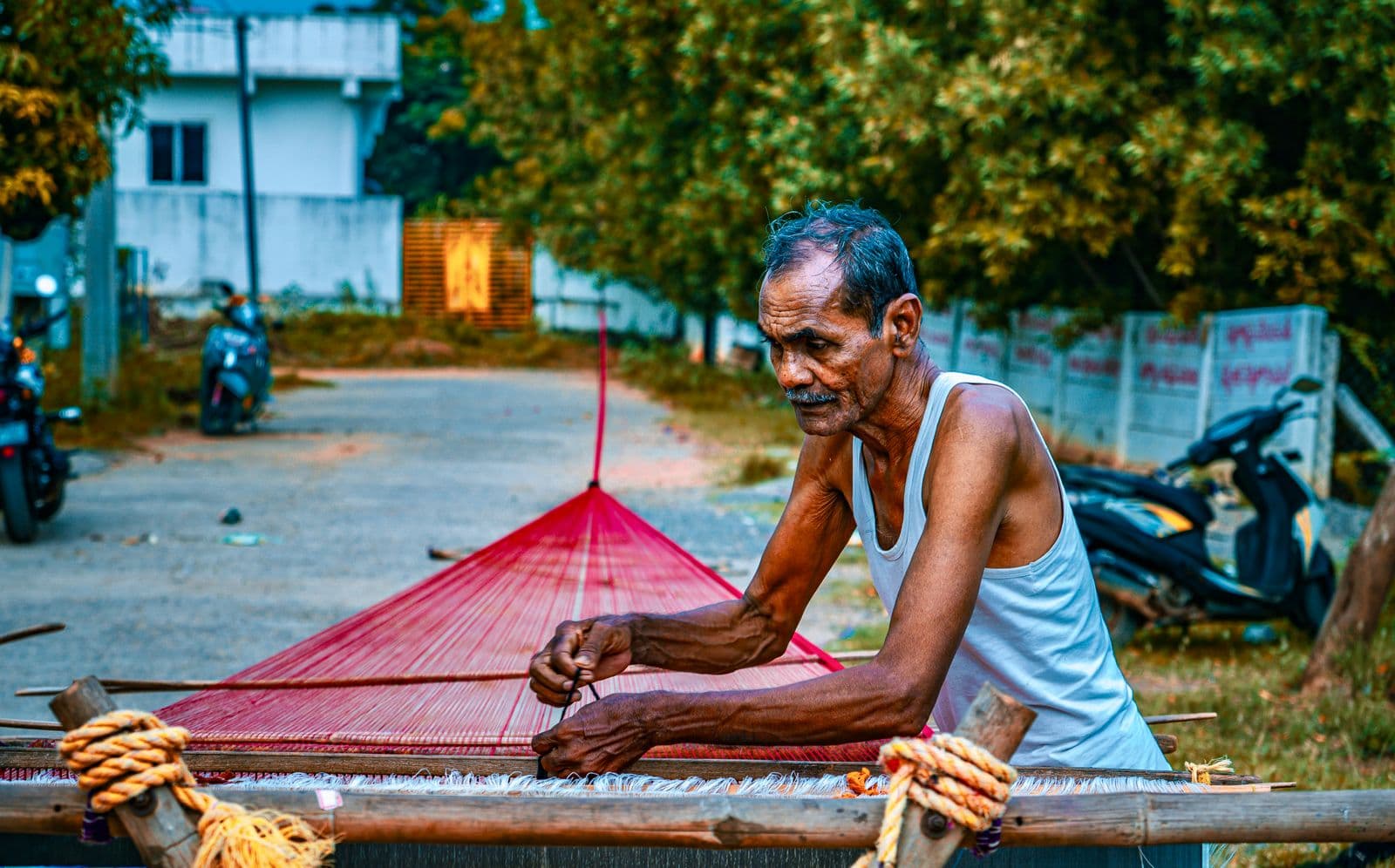
Weavers knot silk yarn on a cotton warp on wooden looms, following a coded colour chart (talim); the carpet is then washed, trimmed and finished. The report's unit uses only looms and hand tools, no machines. The report says about 80% of carpets made in India are exported, so the main buyers are exporters and carpet houses, with home-décor shops at home.
Capacity: 400 sq ft of carpet a day (10-hour shift); 60% use in year 1.
§2Is it right for you?
Who it is for
A weaving family or contractor in the carpet belt who already has links with exporters.
Who it is not for
Someone with no access to trained carpet weavers or an export buyer.
Advantages
- No costly machines — looms and hand tools only
- Bhadohi carpets carry a GI tag, which helps with foreign buyers
- Silk carpets sell at a premium and last for generations
- Trained weavers are available in the Bhadohi–Mirzapur–Varanasi belt
Drawbacks
- Very labour-heavy: wages ₹10.33 L on ₹43.09 L sales in year 1
- Thin margin — net profit only 3% in year 1
- Most demand is from abroad, so orders depend on foreign buyers
- Silk yarn is costly and delicate to work with
Skills you need
- Reading the talim colour chart and knot counts
- Managing weavers and checking quality
- Buying yarn and controlling dyeing
- Working to exporters' order specifications
Why difficulty 3/5: Little machinery cost, but you need skilled weavers and export buyers.
§3Market
Who buys
- Carpet exporters in the Bhadohi–Mirzapur cluster
- Home-décor and furnishing stores
- Hotels and interior designers
How it sells
- Job work or supply to exporters
- Direct export after IEC and CEPC registration
- Handicraft fairs and online marketplaces
Good to know
- The report says about 80% of carpets made in India are exported and puts the home market at about ₹200 crore.
- Carpets from nine districts of the region carry the GI tag 'Handmade carpet of Bhadohi' (2010, per the report).
§4Raw material & machinery
| Item | Qty | Cost |
|---|---|---|
| Wooden carpet looms | as needed | — |
| Hand tools: knife, comb (panja), shears, tufting tool; stores and spares | LS | ₹40,000–45,000 |
From: PMEGP sample project report — Silk Carpet (prepared by Udyami/Samadhan)
- Silk yarn (mulberry)average raw material cost ₹40–50 per sq ft of carpet (report)
- Cotton yarn (warp)from local spinning mills, or from Bikaner and Surat through dealers (report)
- Dyes and chemicalsbought through dealers in the cluster
From: PMEGP sample project report — Silk Carpet (prepared by Udyami/Samadhan)
Suppliers in Building Business Bazaar
Central Silk Technological Research Institute (CSTRI), Bengaluru · Bengaluru →
In our raw material database
§5Licences & registration
- Udyam registration
- GST registration
- Trade licence from the local body
- IEC from DGFT and registration with the Carpet Export Promotion Council (CEPC) to export
§6Schemes & subsidies
- PMEGPCentralActive15–35% subsidy
- MudraCentralActiveLoan up to ₹20 lakh, no collateral
- CGTMSECentralActiveNo collateral, up to ₹10 crore
PMEGP (the report is a PMEGP sample), MUDRA (₹9.89 L is within its ₹20 lakh limit) and CGTMSE for a loan without collateral.
§7Money
How the investment is worked out: Samadhan report: building/shed 1,500 sq ft ₹5.00 L, furniture & fixtures ₹1.00 L, working capital ₹3.89 L = ₹9.89 L. No machinery line — looms and hand tools only (stores & spares ₹40,000–45,000). Finance: term loan ₹5.40 L, cash credit ₹3.50 L, own money ₹0.99 L.
Working capital: Working capital ₹3.89 L in the cost (bank cash credit ₹3.50 L); 15 days of stock and 15 days' credit to buyers assumed.
Year not printed on the report — check current machinery and material prices.
§8Export potential
Confirm the HS code in the DGFT ITC(HS) lookup before you export
Export council / board: Carpet Export Promotion Council (CEPC)
- Get an Import Export Code (IEC) from DGFT before exporting.
- Foreign buyers often ask for social-compliance and no-child-labour certificates.
§9Risks — where people fail
- Export orders drop when demand abroad slows
- Weavers leave for better wages
- Colour or knot defects lead to rejection
- Buyers' social-compliance (no child labour) audits
§1030 / 60 / 90-day plan
A general plan that applies to any business. A plan for this business will be added after research.
- Days 1–30: Visit a working silk carpet weaving unit, ask 10 buyers about price and quantity, and get quotations from 3 suppliers.
- Days 31–60: Udyam and the licences you need (Udyam registration, GST registration), a project report (DPR), and the scheme or loan file.
- Days 61–90: Space and machines, trial production, and first deliveries to 10 customers.
§11Who to connect with
Associations, clusters and training institutes — the directory is being built. Connect
§12Watch
There is no episode on this business yet. Shows are coming soon on the Podcast page.
Want to start Silk Carpet Weaving?
DPR, loan file or registration — ask us on WhatsApp.
¶Sources
Data review: 6 October 2026. Spotted a mistake? Report it. For information only — not legal or financial advice.