

§1What this business is
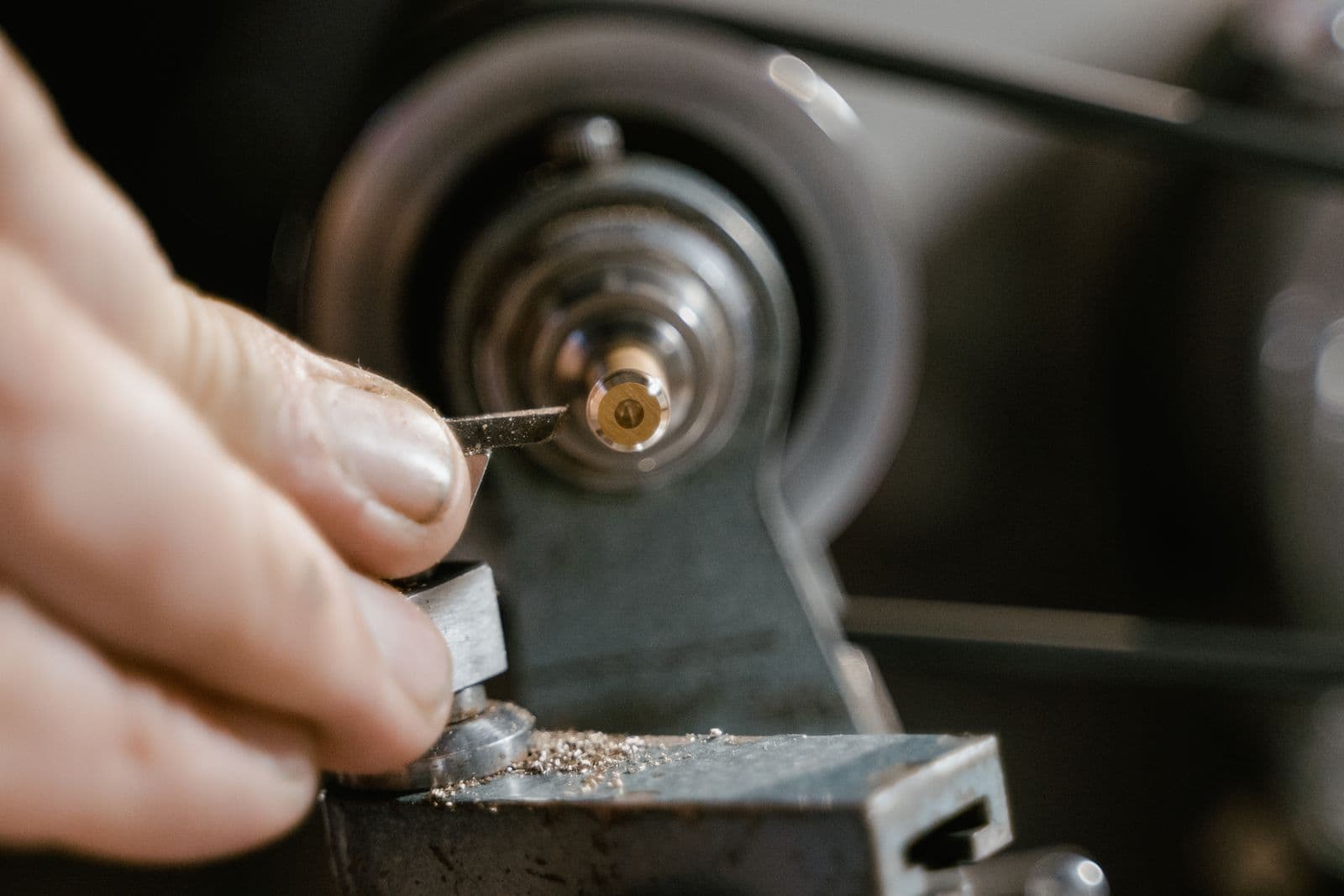
A throttle control pipe sits on the handlebar and lets the rider control speed; a gear control pipe is used on two-wheelers where the gear is changed by hand. Both are short pieces of good ERW steel pipe — for some models about 25 mm in diameter, 1.5 mm thick and 150–250 mm long. The pipe is cut to length on a power hacksaw or lathe, ground on a centreless grinder, slotted or drilled on a milling or drilling machine, deburred, sent out for zinc plating (7–8 microns, with yellow passivation), inspected and packed. Sizes differ for each vehicle model, so the pipes are made to the vehicle maker's drawing. Most demand is original equipment, with some replacement sales as spares.
Capacity: 1,20,000 control pipes a year at 75% capacity use on a single shift, valued at ₹28.80 lakh (₹24 a pipe).
§2Is it right for you?
Who it is for
A machinist or small workshop owner near an auto-parts cluster who can win orders from vehicle makers or their vendors.
Who it is not for
Someone with no access to auto-component buyers or no experience of working to a drawing.
Advantages
- Small investment of about ₹11.6 lakh on a rented shed
- Every two-wheeler needs a throttle pipe
- Simple machining steps; plating is done outside
- The profile says no pollution control is needed in the unit
Drawbacks
- Low value product at ₹24 a pipe
- Each vehicle model needs its own size, jigs and fixtures
- Buyers reject pipes that are outside the drawing tolerance
- Profit depends on steady orders from a few buyers
Skills you need
- Centreless grinding and milling
- Reading drawings and holding tolerances
- Checking plating thickness and finish
- Dealing with OEM and vendor purchase teams
Why difficulty 2/5: Simple machining, but getting and keeping auto-maker orders is the hard part.
§3Market
Who buys
- Two-wheeler makers (original equipment)
- Tier-1 vendors who supply handlebar and control assemblies
- Auto spare-parts dealers
How it sells
- Direct supply against the vehicle maker's drawing and purchase order
- Sale through spare-parts wholesalers for the replacement market
Good to know
- The profile says demand follows two-wheeler production; replacement demand is smaller.
- Selling price in the profile is ₹24 a pipe.
§4Raw material & machinery
| Item | Qty | Cost |
|---|---|---|
| Centreless grinding machine (grinding capacity 50 mm dia, 500 mm length) | 1 | ₹4,50,000 |
| Lathe (adda), 1,000 mm bed, with 2 HP motor | 1 | ₹40,000 |
| Milling machine (adda) with 1 HP motor | 2 | ₹80,000 |
| Bench grinder | 1 | ₹8,000 |
| Buffing machine, 8-inch wheel | 1 | ₹6,000 |
| Bench drilling machine, 13 mm capacity | 1 | ₹8,000 |
| Dies, punches, jigs and fixtures, hand tools and measuring instruments | — | ₹75,000 |
| Office furniture, computer with UPS and printer | — | ₹1,00,000 |
From: DC-MSME project profile — Control Pipes for Two Wheelers (2010)
- ERW steel pipes2,000 m a month at ₹36 a metre (₹72,000)
- Zinc plating done by an outside plater₹25,000 a month
- Packing material and consumables₹10,000 a month
From: DC-MSME project profile — Control Pipes for Two Wheelers (2010)
§5Licences & registration
- Udyam registration
- GST registration
- Factory licence if your worker count and power use cross the Factories Act limits
- Vendor registration with the vehicle maker or its tier-1 supplier
Start it in your state
Pick your state: today’s cost, central + state subsidy, raw material, land and help, on one page.
§6Schemes & subsidies
- PMEGPCentralActive15–35% subsidy
- MudraCentralActiveLoan up to ₹20 lakh, no collateral
- CGTMSECentralActiveNo collateral, up to ₹10 crore
At ₹11.57 lakh the project fits PMEGP (manufacturing ceiling ₹50 lakh) and a MUDRA loan (up to ₹20 lakh); CGTMSE can cover the bank loan without collateral.
§7Money
How the investment is worked out: Fixed capital ₹8,67,200 (two months' rent deposit ₹16,000; machinery, installation, tools, jigs and office equipment ₹8,26,200; pre-operative ₹25,000) + working capital for 1½ months ₹2,90,000 = ₹11,57,200.
Working capital: Recurring cost ₹1,93,300 a month (raw material and plating ₹1,07,000, staff ₹59,800, utilities ₹6,500, other expenses ₹20,000); working capital for 1½ months ₹2,90,000.
Prices from December 2010 — machinery, steel pipe and wage costs will be much higher now.
§8Export potential
Confirm the HS code in the DGFT ITC(HS) lookup before you export
Export council / board: EEPC India
- The profile does not plan exports; the pipes are sold to Indian vehicle makers.
- Confirm the 8-digit ITC(HS) line with DGFT or your customs broker before shipping.
§9Risks — where people fail
- Rejection of a lot for fitment problems
- Loss of an OEM or vendor order
- Rise in ERW pipe prices
- Poor zinc plating by the outside plater
§1030 / 60 / 90-day plan
A general plan that applies to any business. A plan for this business will be added after research.
- Days 1–30: Visit a working control pipes for two-wheelers (throttle and gear pipes) unit, ask 10 buyers about price and quantity, and get quotations from 3 suppliers.
- Days 31–60: Udyam and the licences you need (Udyam registration, GST registration), a project report (DPR), and the scheme or loan file.
- Days 61–90: Space and machines, trial production, and first deliveries to 10 customers.
§11Who to connect with
§12Watch
There is no episode on this business yet. Shows are coming soon on the Podcast page.
Want to start Control Pipes for Two-Wheelers (Throttle and Gear Pipes)?
DPR, loan file or registration — ask us on WhatsApp.
¶Sources
Data review: 6 October 2026. Spotted a mistake? Report it. For information only — not legal or financial advice.