

§1What this business is
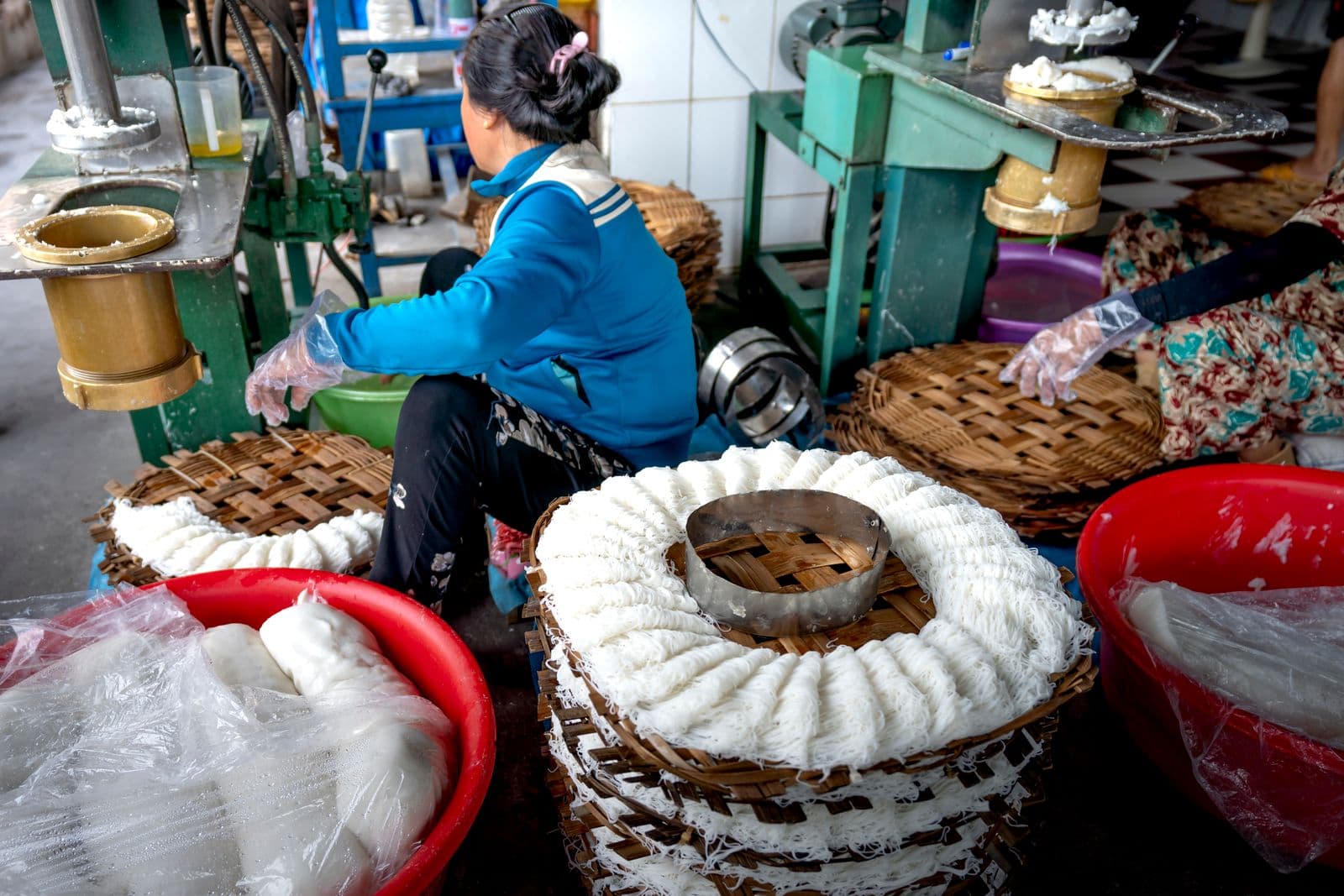
Wheat flour is mixed with water and salt into a stiff dough, pushed through an extrusion machine, cut, steamed and dried on trays, then packed with a tastemaker in pouches. The report targets semi-urban and rural North India, where branded noodles are seen as costly, with an affordable 200 g pack at ₹15. Plan: 200 tonnes (10 lakh pouches) a year.
Capacity: 200 tonnes a year — 10,00,000 pouches of 200 g; 8 hours a day, 300 days; 75% capacity in year 1.
§2Is it right for you?
Who it is for
Someone with an FMCG distribution network in small towns and villages.
Who it is not for
Someone without a distribution plan — shelf space is the real battle.
Advantages
- Noodles are already known in small towns — no need to explain the product
- Room for a cheaper local brand in semi-urban and rural areas
- Short implementation (2 months in the report)
- The same line can make pasta and vermicelli
Drawbacks
- Big national brands dominate and advertise heavily
- Selling and distribution cost is high
- Needs strict food-safety and shelf-life control
- Tastemaker quality decides repeat buying
Skills you need
- Dough and extrusion control
- Drying and moisture testing
- FSSAI compliance and labelling
- Distributor and retailer management
Why difficulty 3/5: Making noodles is easy; winning shelf space against national brands is hard.
§3Market
Who buys
- Households in semi-urban and rural North India
- Fast-food stalls and eateries
- Hostels and canteens
How it sells
- FMCG distributors to kirana shops
- Wholesale markets
- Local advertising in regional-language media
Good to know
- The report says branded noodles at about ₹100 a kg are seen as costly in semi-urban and rural markets, and suggests a price of ₹60–65 a kg.
- It names the Middle East and Europe as export markets for noodles and pasta.
§4Raw material & machinery
| Item | Qty | Cost |
|---|---|---|
| Steam boiler | 1 | ₹1,50,000 |
| Vertical powder mixer | 1 | ₹75,000 |
| Dough maker | 1 | ₹50,000 |
| Noodle extrusion machine | 1 | ₹5,00,000 |
| Tray dryer | 1 | ₹1,75,000 |
| Wooden trays | 1 lot | ₹35,000 |
| Utensils | 1 lot | ₹15,000 |
| Water storage tank | 1 | ₹5,000 |
| Weighing machine and balances | 1 lot | ₹20,000 |
| Working tables | 1 lot | ₹10,000 |
| Pouch packaging machine | 1 | ₹1,25,000 |
| Lab and pollution-control equipment | 1 lot | ₹1,00,000 |
| Electrification and installation | 1 lot | ₹50,000 |
From: PMEGP sample project report — Ready to Eat Noodles (prepared by Udyami/Samadhan)
- Wheat flour / maidamain raw material
- Sugar and common saltdough and tastemaker
- Spices, garlic, gingerfor the tastemaker
- Sodium bicarbonate and colouradditives
- Cartons, labels and pouches200 g pouches; all raw material ₹79.00 L in year 1
From: PMEGP sample project report — Ready to Eat Noodles (prepared by Udyami/Samadhan)
In our raw material database
Wheat →Crude palm oil (CPO) →Wheat flour (atta, maida, sooji) →
§5Licences & registration
- FSSAI licence
- Udyam
- GST
- Legal Metrology registration for packed goods
- Pollution control board consent
- IS 1485 (BIS standard for macaroni, spaghetti, vermicelli and egg noodles) as a quality benchmark
§6Schemes & subsidies
- PMEGPCentralActive15–35% subsidy
- PMFMECentralUnclear35% subsidy, up to ₹10 lakh
- MudraCentralActiveLoan up to ₹20 lakh, no collateral
- CGTMSECentralActiveNo collateral, up to ₹10 crore
The report was written for PMEGP; PMFME supports micro food units; MUDRA and CGTMSE help with the loan.
§7Money
How the investment is worked out: Samadhan report: building & civil work ₹3.00 L + plant & machinery ₹13.10 L + furniture ₹2.00 L + working capital ₹5.56 L = ₹23.66 L.
Working capital: Working capital ₹5.56 L in the project cost (fresh bank demand ₹5.00 L).
Year not printed on the sample report — check current machinery prices.
§8Export potential
Confirm the HS code in the DGFT ITC(HS) lookup before you export
Export council / board: APEDA
- Confirm the 8-digit ITC(HS) line with DGFT or your customs broker before shipping.
- You need an Import Export Code (IEC) from DGFT before the first shipment.
§9Risks — where people fail
- Brand competition and price wars
- Wheat flour and oil price rises
- Food-safety recalls
- Unsold stock near expiry
§1030 / 60 / 90-day plan
A general plan that applies to any business. A plan for this business will be added after research.
- Days 1–30: Visit a working instant noodles making unit, ask 10 buyers about price and quantity, and get quotations from 3 suppliers.
- Days 31–60: Udyam and the licences you need (FSSAI licence, Udyam), a project report (DPR), and the scheme or loan file.
- Days 61–90: Space and machines, trial production, and first deliveries to 10 customers.
§11Who to connect with
Associations, clusters and training institutes — the directory is being built. Connect
§12Watch
There is no episode on this business yet. Shows are coming soon on the Podcast page.
Want to start Instant Noodles Making?
DPR, loan file or registration — ask us on WhatsApp.
¶Sources
Data review: 6 October 2026. Spotted a mistake? Report it. For information only — not legal or financial advice.