

§1What this business is
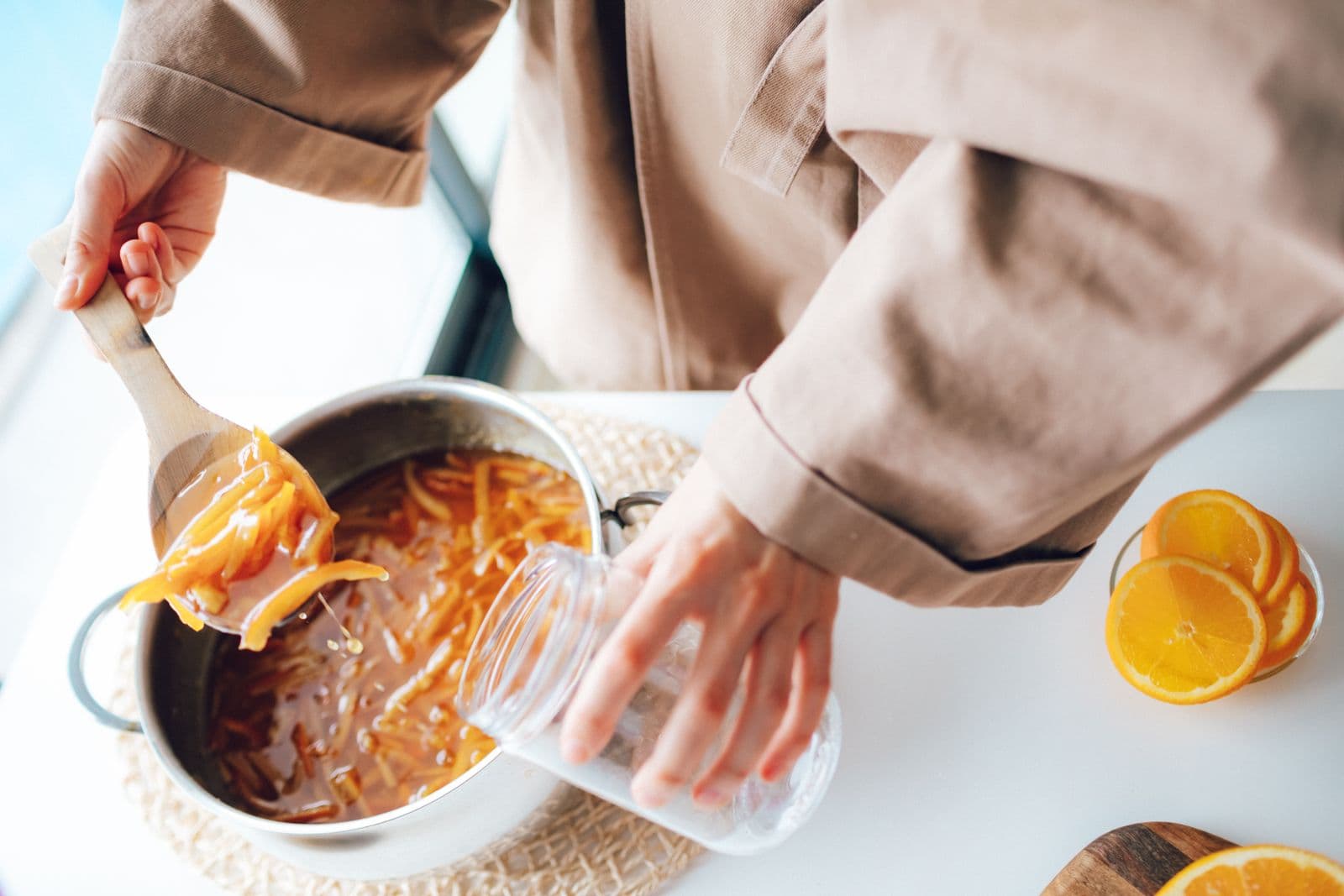
Fruit is pulped or juiced, cooked in a steam-jacketed kettle with sugar (and pectin or acid where the fruit lacks them) until soluble solids pass 65%, then filled into washed bottles and sealed. Jam keeps the fruit flesh; jelly uses only clear juice. The KVIC profile adds murabba and notes it can start from home.
Capacity: Samadhan: 50 kg an hour, 96,000 kg a year (48,000 kg in year 1 at 50%). KVIC: 231 quintals a year.
§2Is it right for you?
Who it is for
A fruit grower, self-help group or home cook ready to build a local brand.
Who it is not for
Someone who wants quick big profits — the margin is thin.
Advantages
- Uses surplus seasonal fruit
- Small start possible (KVIC ₹7.70 lakh)
- Long shelf life
- Can begin at home, says the KVIC profile
Drawbacks
- Fruit and sugar are most of the cost; thin net margin
- Strong national brands on shelves
- Health trend away from sugar
- Glass bottles break and cost money
Skills you need
- Cooking to the right set (TSS above 65%)
- Hygiene and bottle sterilising
- Fruit buying in season
- Retail selling and branding
Why difficulty 2/5: Simple kitchen-scale process; the work is selling against brands.
§3Market
Who buys
- Households through grocery shops
- Bakeries, hotels and caterers
- Schools and institutions
How it sells
- Distributors and retail shops
- Fairs, exhibitions and online
Good to know
- Buyers want low-sugar, clean-label and fortified jams, the report says.
§4Raw material & machinery
| Item | Qty | Cost |
|---|---|---|
| Samadhan: pulper, slicing machine, juice extractor, steam-jacketed kettle, mixer-grinder, bottle washing and filling machine, baby boiler, cap sealing machine, utensils and scales | 1 set | ₹7,00,000 + GST ₹1,26,000 |
| KVIC: boiler, steam kettle, pulper, bottle cleaning machine, SS-top table, SS vessels and utensils | 1 set | ₹4,40,000 |
From: PMEGP sample project report — Jam & Jelly (prepared by Udyami/Samadhan) · KVIC Project Profile — Jam Jelly Murabba Manufacturing Scheme (PMEGP)
- Fruits₹100 a kg of output in year 1 (Samadhan)
- Sugar, pectin, additives, preservatives and food coloursthe main consumables listed
- Bottles and caps₹6 a kg in year 1 (Samadhan)
- Raw material and packing (KVIC)₹1,00,000 and ₹50,000 a year
From: PMEGP sample project report — Jam & Jelly (prepared by Udyami/Samadhan) · KVIC Project Profile — Jam Jelly Murabba Manufacturing Scheme (PMEGP)
Suppliers in Building Business Bazaar
NIFTEM Kundli (National Institute of Food Technology Entrepreneurship and Management) · Kundli →NIFTEM Thanjavur (National Institute of Food Technology, Entrepreneurship and Management) · Thanjavur →CSIR-Central Food Technological Research Institute (CFTRI), Mysuru · Mysuru →
In our raw material database
§5Licences & registration
- FSSAI licence or registration
- Udyam registration
- GST registration
- Fire/pollution registration as required (report)
- Trademark for your brand name (optional)
§6Schemes & subsidies
- PMEGPCentralActive15–35% subsidy
- PMFMECentralUnclear35% subsidy, up to ₹10 lakh
- MudraCentralActiveLoan up to ₹20 lakh, no collateral
Both reports are PMEGP models; PMFME covers fruit processing; MUDRA covers this size.
§7Money
How the investment is worked out: KVIC profile: building shed (1,000 sq ft) ₹2.00 L + equipment ₹4.40 L + working capital ₹1.30 L = ₹7.70 L. Samadhan report: plant & machinery ₹8.26 L (₹7.00 L + 18% GST) + furniture ₹1.00 L = ₹9.26 L printed as the cost of project; its working capital of ₹7.78 L (bank limit ₹7.00 L) is shown separately.
Working capital: Samadhan: working capital ₹7.78 L (bank ₹7.00 L). KVIC: ₹1.30 L.
Year not printed in the report — check current machinery and raw-material prices.
§8Export potential
Confirm the HS code in the DGFT ITC(HS) lookup before you export
Export council / board: APEDA
- Sweetened whole-fruit murabba may fall under 2006 or 2008 — check the exact line.
§9Risks — where people fail
- Fermentation or mould from poor sealing
- Fruit and sugar price rise
- Unsold stock
- Labelling errors
§1030 / 60 / 90-day plan
A general plan that applies to any business. A plan for this business will be added after research.
- Days 1–30: Visit a working jam, jelly and murabba making unit, ask 10 buyers about price and quantity, and get quotations from 3 suppliers.
- Days 31–60: Udyam and the licences you need (FSSAI licence or registration, Udyam registration), a project report (DPR), and the scheme or loan file.
- Days 61–90: Space and machines, trial production, and first deliveries to 10 customers.
§11Who to connect with
Associations, clusters and training institutes — the directory is being built. Connect
§12Watch
There is no episode on this business yet. Shows are coming soon on the Podcast page.
Want to start Jam, Jelly and Murabba Making?
DPR, loan file or registration — ask us on WhatsApp.
¶Sources
- PMEGP sample project report — Jam & Jelly (prepared by Udyami/Samadhan)
- KVIC Project Profile — Jam Jelly Murabba Manufacturing Scheme (PMEGP)
Data review: 6 October 2026. Spotted a mistake? Report it. For information only — not legal or financial advice.