

§1What this business is
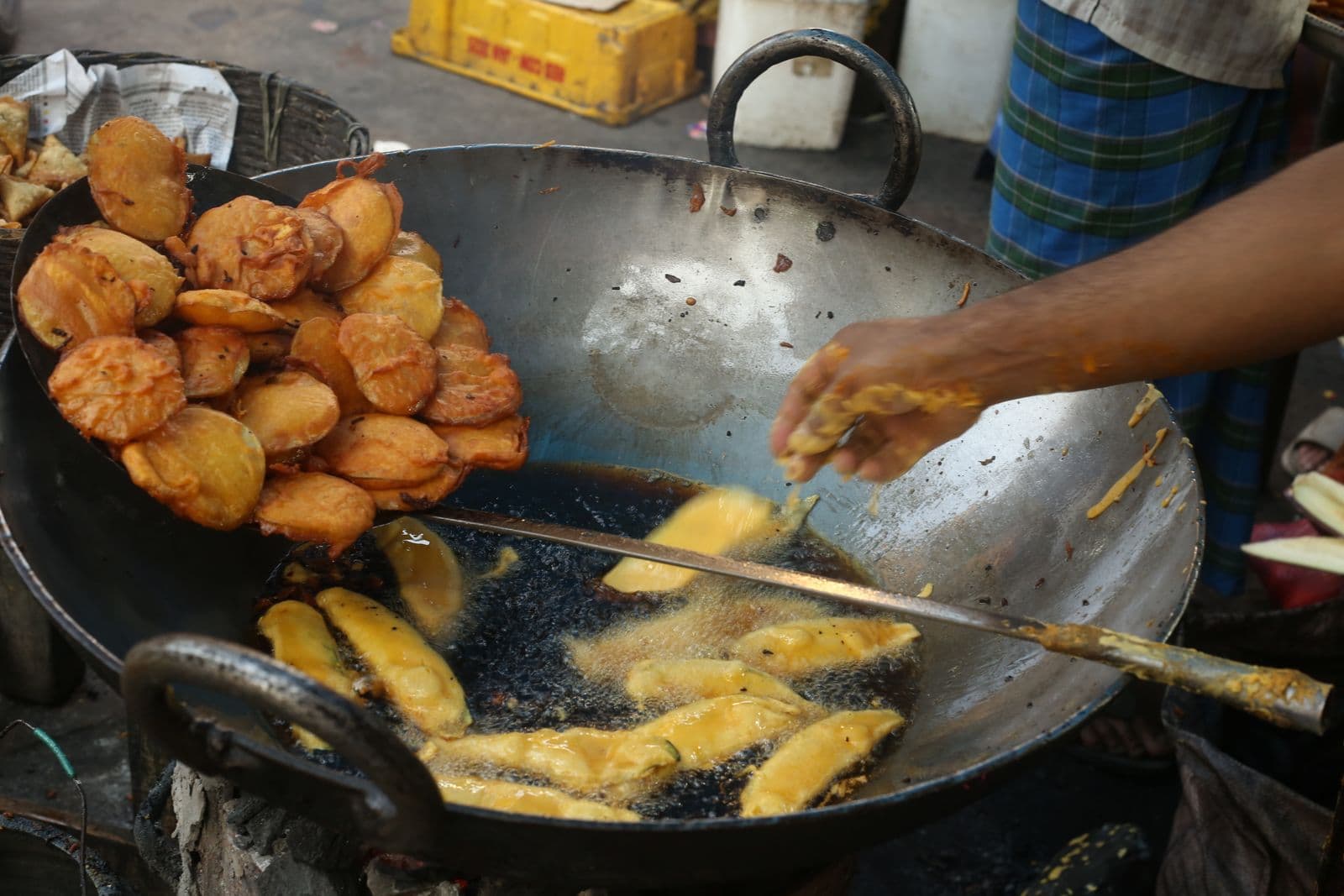
Fresh tapioca (cassava) roots are washed, peeled and sliced, blanched in a kettle, dried, deep-fried and packed with nitrogen flushing. The model unit makes 150 tonnes of chips a year, or 500 kg a day, and keeps a cold store for the roots.
Capacity: 150 tonnes of chips a year (500 kg a day) at 300 days; 55% use in year 2, 65% in year 3, 75% in year 4 and 90% from year 5. Needs 741.25 kg of roots a day at 55% and 1,212.75 kg a day at 90% — 2.7 kg of tapioca for 1 kg of chips.
§2Is it right for you?
Who it is for
A snack maker or farmer group in a tapioca-growing district of Kerala, Tamil Nadu or the North-East.
Who it is not for
Someone far from tapioca farms or unable to manage frying-oil quality.
Advantages
- Tapioca is cheap — ₹15 a kg in the DPR
- A well-loved snack in Kerala and Tamil Nadu
- Simple frying process
Drawbacks
- ₹10 L of the machinery cost is a cold store
- Roots spoil within days of harvest
- Frying oil is a large running cost that the DPR does not spell out
Skills you need
- Peeling and even slicing
- Blanching and frying to the right crispness
- Managing frying oil
- Packing and distribution
Why difficulty 2/5: A straightforward fried snack; raw material is highly perishable.
§3Market
Who buys
- Households and snack shoppers
- Bakeries and tea shops
- Canteens and caterers
How it sells
- Kirana stores and bakeries
- Supermarkets
- Snack distributors and wholesalers
Good to know
- The DPR sets the sale price at ₹270 a kg.
§4Raw material & machinery
| Item | Qty | Cost |
|---|---|---|
| Cold store, 9,000 kg | 1 | ₹10.00 lakh |
| Washing tank, 500 litre | 1 | ₹0.40 lakh |
| Tapioca peeler, 500 kg per hour | 1 | ₹2.50 lakh |
| Vegetable cutter/slicer, 500 kg per hour | 1 | ₹1.20 lakh |
| Gas-operated blanching kettle, 300 litre | 1 | ₹1.00 lakh |
| Dryer, 120 kg per batch | 1 | ₹2.20 lakh |
| Gas-operated deep fat frying kettle, 100 litre | 1 | ₹0.50 lakh |
| Continuous sealing machine with nitrogen flush | 1 | ₹0.50 lakh |
| Weighing balance | 1 | ₹0.06 lakh |
| Accessories | 1 | ₹0.50 lakh |
From: NIFTEM-Thanjavur (IIFPT) PMFME model DPR — Tapioca Chips
- Fresh tapioca (cassava) rootscosted at ₹15 a kg; 2.7 kg makes 1 kg of chips
- Frying oil, salt and spicesbought from wholesalers
- Laminated pouchesfor nitrogen-flushed packs
From: NIFTEM-Thanjavur (IIFPT) PMFME model DPR — Tapioca Chips
§5Licences & registration
- Udyam registration
- GST registration
- FSSAI licence or registration
- Trade licence from the local body
- Legal Metrology registration for packed goods
Start it in your state
Pick your state: today’s cost, central + state subsidy, raw material, land and help, on one page.
§6Schemes & subsidies
- PMFMECentralUnclear35% subsidy, up to ₹10 lakh
- PMEGPCentralActive15–35% subsidy
- MudraCentralActiveLoan up to ₹20 lakh, no collateral
- CGTMSECentralActiveNo collateral, up to ₹10 crore
The DPR is written for the PMFME scheme and assumes its 35% credit-linked subsidy (up to ₹10 lakh) with a bank term loan. At this size the project is also within PMEGP's ₹50 lakh manufacturing ceiling; MUDRA and CGTMSE can support the loan.
§7Money
How the investment is worked out: Total project cost ₹37.03 L as printed in the Project at a Glance = building ₹5.18 L + machinery ₹18.86 L + utilities ₹0.80 L + other fixed assets ₹0.90 L + pre-operative ₹0.90 L + contingencies ₹1.20 L + working capital margin ₹9.19 L. Section 2.10 of the same DPR prints ₹36.78 L with machinery at ₹18.61 L, but the machinery table adds up to ₹18.86 L.
Working capital: Working capital margin ₹9.19 L in the project cost; bank working capital finance ₹27.58 L in year 2, ₹32.60 L in year 3 and ₹44.45 L in year 4.
Year not printed on the DPR (the PMFME scheme began in 2020) — check current machinery prices.
§8Export potential
Export council / board: APEDA
- The DPR prints no HS code or export figure — confirm the ITC-HS code on the DGFT site before you quote to a foreign buyer.
§9Risks — where people fail
- Roots going bad before use
- Rancid chips from old oil or poor packing
- Competition from local unbranded chips
§1030 / 60 / 90-day plan
A general plan that applies to any business. A plan for this business will be added after research.
- Days 1–30: Visit a working tapioca (cassava) chips unit, ask 10 buyers about price and quantity, and get quotations from 3 suppliers.
- Days 31–60: Udyam and the licences you need (Udyam registration, GST registration), a project report (DPR), and the scheme or loan file.
- Days 61–90: Space and machines, trial production, and first deliveries to 10 customers.
§11Who to connect with
§12Watch
There is no episode on this business yet. Shows are coming soon on the Podcast page.
Want to start Tapioca (Cassava) Chips?
DPR, loan file or registration — ask us on WhatsApp.
¶Sources
Data review: 6 October 2026. Spotted a mistake? Report it. For information only — not legal or financial advice.