

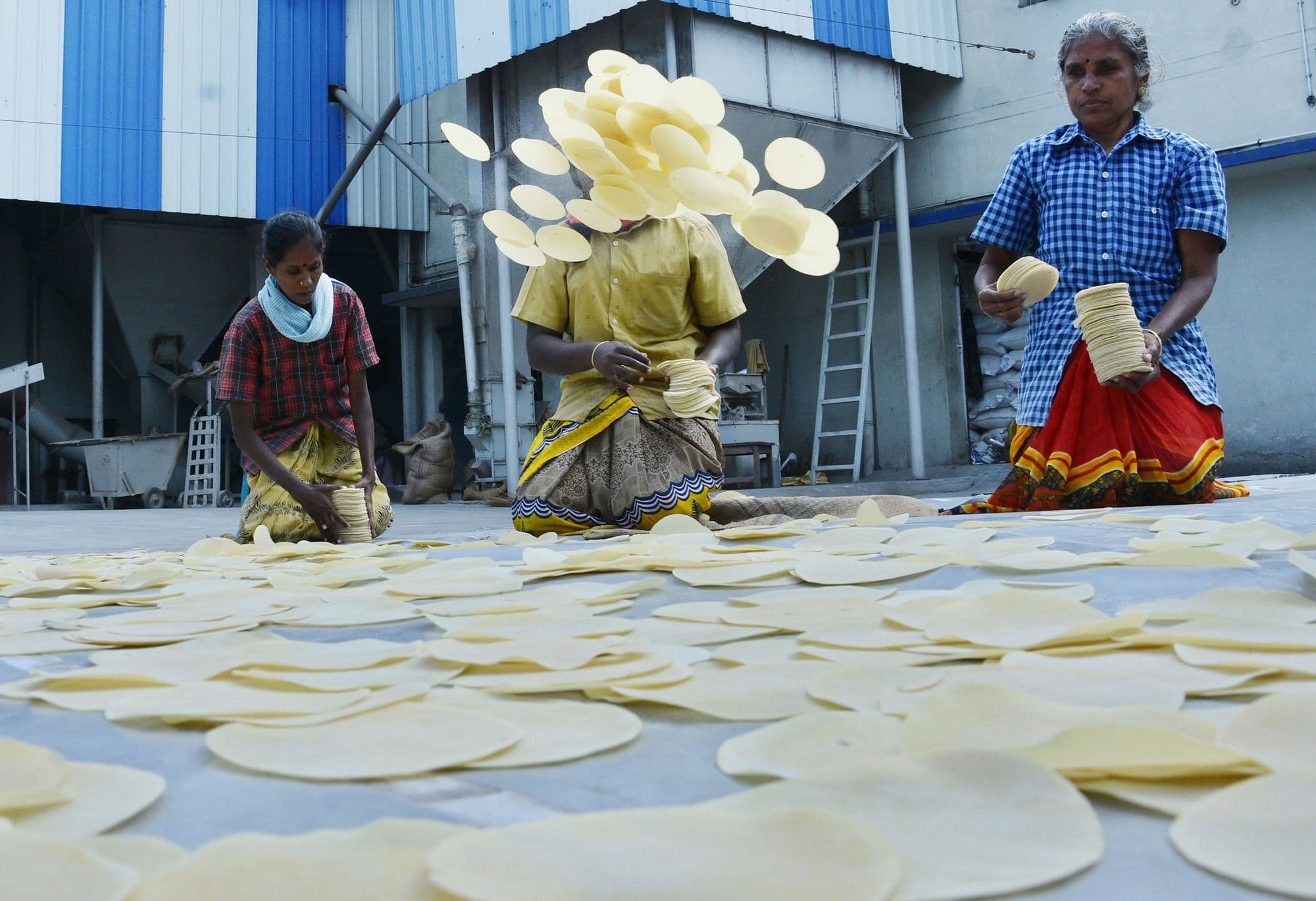
What it is
Wet-milling plants extract starch from maize; sago units in Salem make it from tapioca. Used in food, paper, textiles, pharma and glucose syrup.
Native maize starch (food and industrial)Tapioca starch and sagoModified starches
Where India produces it
- Bihar
2023-24: 5.71 million tonnes (15.16% of India). Figure is maize, the main starch input
- Karnataka
2023-24: 5.63 million tonnes (14.95% of India). Figure is maize
- Madhya Pradesh
2023-24: 4.34 million tonnes (11.52% of India). Figure is maize
Where imports come from
India is self-sufficient in native starch; imports (mostly speciality starch) were US$ 15.58 million in 2024-25 (HS 1108).
- Belgium — US$ 4.16 million imported under HS 1108 in 2024-25
- France — US$ 2.29 million imported under HS 1108 in 2024-25
- Denmark — US$ 1.65 million imported under HS 1108 in 2024-25
- Italy — US$ 1.6 million imported under HS 1108 in 2024-25
Rules before you buy or sell
- FSSAI licence or registration is needed to process, pack, store or sell it as food (Food Safety and Standards Act, 2006).
- Import and export are governed by the ITC(HS) policy; check the current DGFT notification before you sign a contract, because policy for farm goods changes often.
Businesses that use it
Compostable Starch Bag Making →Frymes (Rice Wafers) →Confectionery (Toffee and Hard Candy) →Namkeen / Bhujia Unit →