

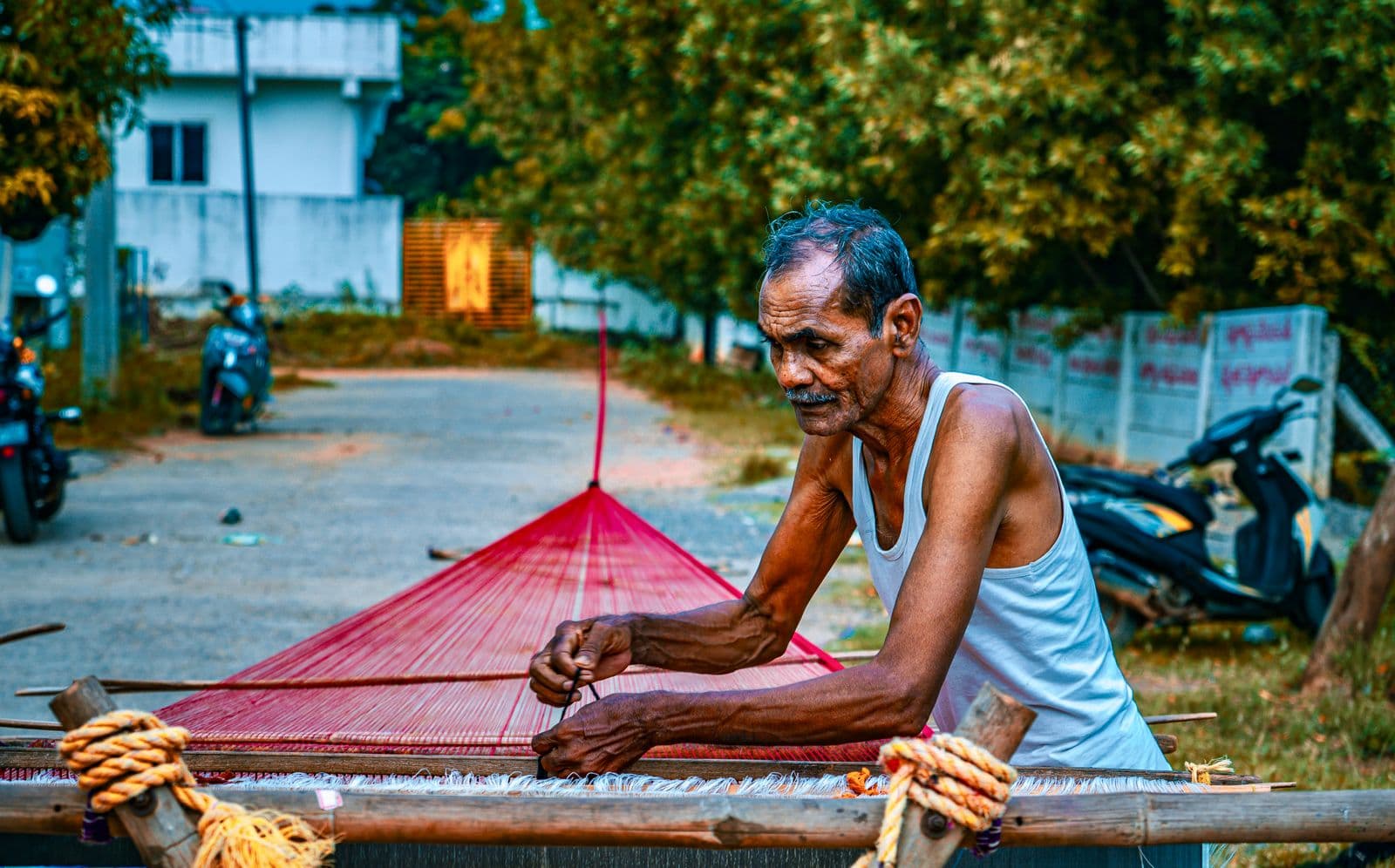
The story
Surat was a silk and zari weaving town for centuries, and after independence its weavers shifted to cheaper synthetic yarn on powerlooms. Texturising units, weaving sheds, dyeing and printing houses and large wholesale textile markets grew side by side, so a fabric can be made and sold within the city. Ring Road's textile markets supply sarees and dress material across India, while newer water-jet and rapier looms have spread to Palsana, Kadodara and Bardoli.
In numbers
Surat district has over 65,000 power looms, nearly 500 texturising units and 400 processing houses; the profile calls it the 'synthetic capital of India' (district profile, c. 2012).
Brief Industrial Profile of Surat District (MSME-DI Ahmedabad, Ministry of MSME) · 2012Of over 41,300 small and medium units in the district, nearly 24,000 are in textiles (district profile, c. 2012).
Brief Industrial Profile of Surat District (MSME-DI Ahmedabad, Ministry of MSME) · 2012Surat is one of five powerloom mega clusters under the Textile Cluster Development Scheme, with Erode, Ichalkaranji, Bengaluru and Karanj.
Annexure 6, textile cluster study (NCAER) · 2025
GI tag
- Surat Zari CraftApplication no. GI Application No. 171Registration details of Geographical Indications (GI Registry, IP India)
Ways in for a newcomer
- Job-work weaving on rented looms
- Saree and dress-material trading through Ring Road markets
- Embroidery and value-addition job-work
- Supplying yarn, spares and looms
Problems the cluster faces
- Low margins and cheap imports
- Effluent rules for dyeing and printing
- Migrant labour shortage in peak season
- Old looms need upgrading
Businesses to start here
Saree Dyeing and Printing →Textile Printing (Screen Printing on Fabric) →Zari and Silk Embroidery →Computerised Embroidery (Job Work) →Yarn Twisting (Doubling) Job Work →Saree Rolling and Polishing →