

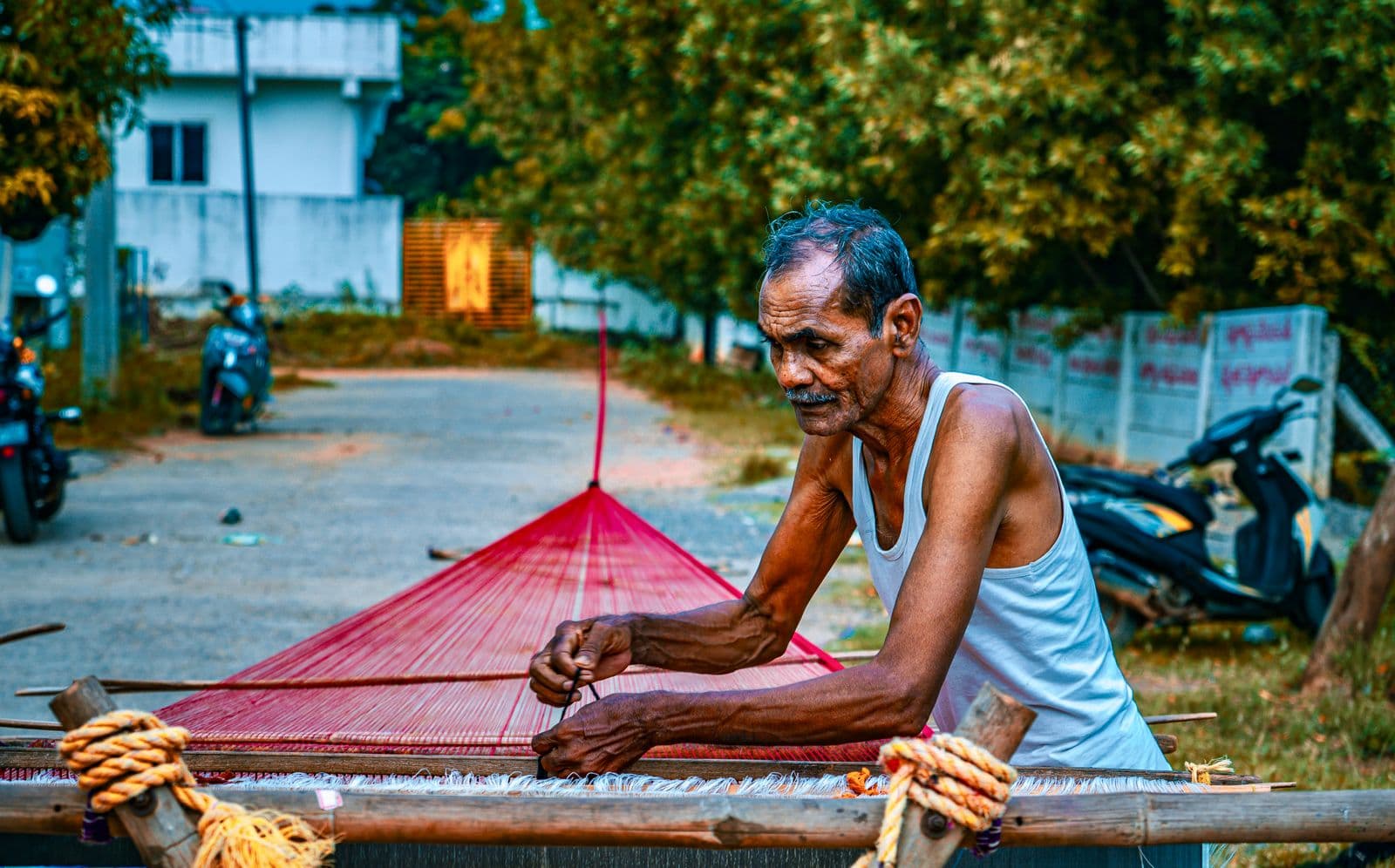
The story
The Paithani saree takes its name from Paithan on the Godavari, a weaving centre since the Satavahana period, and was patronised by the Peshwas. Weaver families later shifted to Yeola in Nashik district, which today makes most Paithanis. Each saree is woven by hand with silk and real or imitation zari, with peacock, lotus and parrot motifs on the border and pallu, and can take weeks to finish.
In numbers
The Paithani Cluster, Yeola had 725 micro units with 3,000 looms (250 registered), a turnover of about Rs 70 crore (2010-11), and direct employment of 3,000 and indirect employment of 7,500.
Brief Industrial Profile of Nashik District, MSME-DI (Ministry of MSME) · 2012Paithani Saree & Fabrics is a registered GI (Application No. 150, Certificate No. 130 dated 03-09-2010); the application for 'Paithan's Paithani' was merged into it.
GI Registry (IP India) – Application No. 150, Paithani Saree & Fabrics · 2010
GI tag
- Paithani Saree & FabricsApplication no. GI Application No. 150, Certificate No. 130 (03-09-2010)GI Registry (IP India) – Application No. 150, Paithani Saree & Fabrics
Ways in for a newcomer
- Online and exhibition sales of GI-tagged Paithanis directly to buyers
- Silk yarn dyeing and twisting locally (now sourced from outside)
- Jacquard design and card-punching services
- Paithani-motif products: stoles, bags, cushion covers for tourists
Problems the cluster faces
- Fake power-loom 'Paithanis' sold at low prices
- High cost of silk and zari
- Young weavers leaving the craft
- No local silk reeling, twisting or dyeing (cluster report)
Businesses to start here
Zari and Silk Embroidery →Handloom and Handicrafts Retail Shop →Saree Rolling and Polishing →