

The story
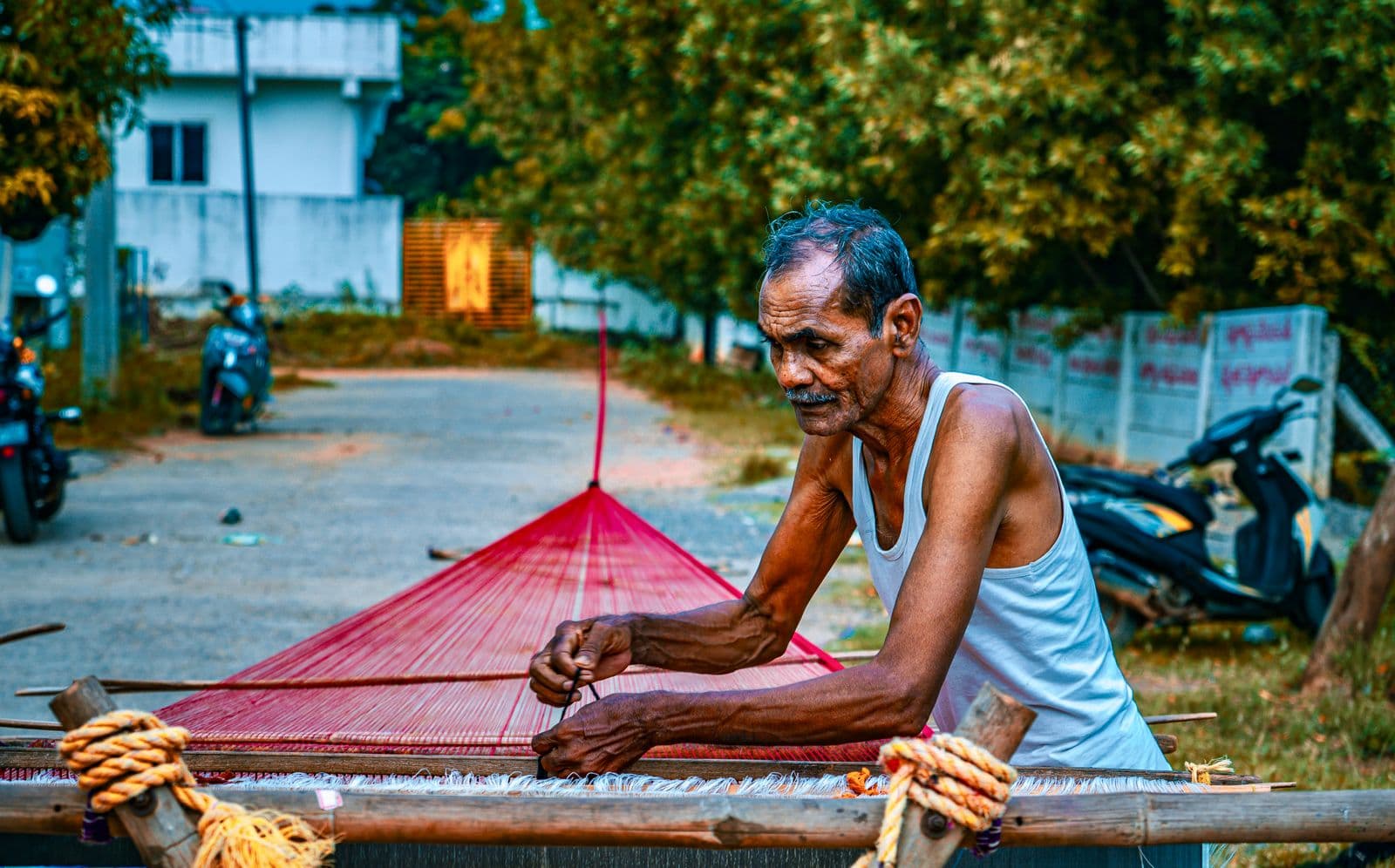
Handloom weavers from north India and Maharashtra settled in Bhiwandi, close to Mumbai's cotton mills and yarn traders. When Mumbai's composite mills declined in the 1980s, weaving shifted to small powerloom sheds in Bhiwandi, where land and power were cheaper. Most looms are plain, run by owners with a few workers on job-work for Mumbai traders, who supply yarn and buy the grey cloth. Bhiwandi is also now one of India's biggest warehousing towns because of its location on the Mumbai–Nashik highway.
In numbers
A 2013 survey cited by the Lok Sabha Standing Committee on Labour lists 1,11,702 powerloom units with 6,08,865 powerlooms in the Bhiwandi cluster.
Standing Committee on Labour (2017-18), 31st Report, Lok Sabha · 2018Under the PowerTex India Scheme, Rs 58.08 crore was released to powerloom units in the Bhiwandi cluster; there are two Integrated Textile and Apparel Development Centres (ITADCs) in Bhiwandi.
PIB – Schemes for modernization of powerloom industry (Rajya Sabha reply, 6 Feb 2026) · 2026Maharashtra has 13 lakh powerlooms, accounting for 50% of the powerlooms in the country; plain powerlooms are about 80% (approx. 10 lakh) of the State's total.
Maharashtra Integrated Textile Policy 2018-23 (MIDC) · 2018
Ways in for a newcomer
- Job-work weaving on shuttleless (rapier, air-jet) looms for traders and brands
- Yarn trading, sizing and warping services
- Fabric processing (dyeing, printing) with proper effluent treatment
- Warehousing and logistics on the Mumbai–Nashik corridor
Problems the cluster faces
- Old plain looms with low productivity
- Power cost and frequent price swings in yarn
- Effluent rules for processing units
- Competition from Surat and imported fabric; migrant labour shortages
Businesses to start here
Bedsheet Weaving Unit (Power Loom) →Cotton Yarn Dyeing (Hank and Package Dyeing) →Textile Printing (Screen Printing on Fabric) →Textile Made-Ups (Napkins, Mats, Aprons) →Saree Dyeing and Printing →Readymade Garments Unit (Baby Rompers) →