

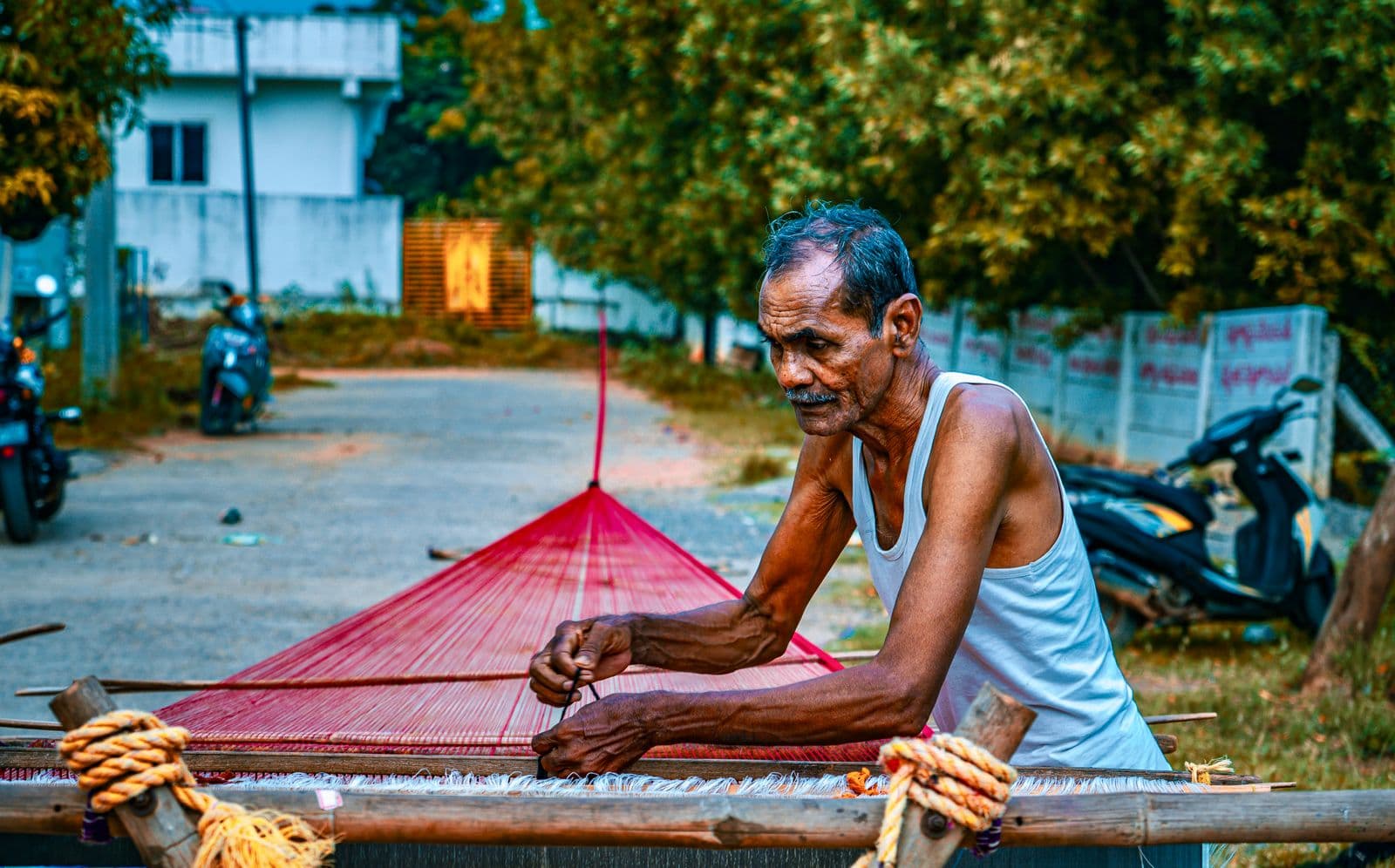
The story
Malegaon's weaving tradition was built by Ansari weaver families, many of whom came from north India in the 1800s and later shifted from handlooms to powerlooms. The town sits on the Mumbai–Agra highway, so yarn comes in from Mumbai and grey cloth goes out to traders and process houses. Most units are small, family-run sheds with plain looms working on job-work.
In numbers
Malegaon is known as the 'City of Powerloom'; the total number of looms is about one lakh and the town produces 80 lakh metres of grey fabric per annum on maximum utilisation of installed looms (undated Textile Commissioner project report).
Project report on modernisation of M/s Ansari Ltd., Malegaon – Office of the Textile CommissionerMalegaon has 75 sizing units and two process houses; about 2.5 lakh workers are engaged in the textile industry (same report).
Project report on modernisation of M/s Ansari Ltd., Malegaon – Office of the Textile CommissionerUnder the PowerTex India Scheme, Rs 12.28 crore was released to powerloom units in the Malegaon cluster; Malegaon has one ITADC.
PIB – Schemes for modernization of powerloom industry (Rajya Sabha reply, 6 Feb 2026) · 2026
Ways in for a newcomer
- Upgrade to rapier or air-jet looms for better fabric and higher rates
- Sizing, warping and yarn supply services
- Direct sales of finished fabric to garment units instead of only grey cloth
- Machine repair and spare-parts shops for looms
Problems the cluster faces
- Old plain looms and low wages
- Cash-based trade; little formal credit
- Power cuts and power cost
- Dependence on Mumbai traders for yarn and orders
Businesses to start here
Bedsheet Weaving Unit (Power Loom) →Cotton Yarn Dyeing (Hank and Package Dyeing) →Textile Printing (Screen Printing on Fabric) →Textile Made-Ups (Napkins, Mats, Aprons) →Saree Dyeing and Printing →Readymade Garments Unit (Baby Rompers) →